Walpurgis Night: Fire, Folklore, and the Shadow of the Witches’ Sabbath

On the night of April 30th, across parts of Central and Northern Europe, fires burn, noise rises into the spring air, and the boundary between worlds seems to thin. This is Walpurgis Night, Walpurgisnacht. It is a festival often reduced to “witches’ night,” yet is far more complex than that label suggests. Beneath the imagery of broomsticks and mountaintop revelry lies a deeply layered tradition shaped by pre-Christian ritual, Christian reinterpretation, and centuries of cultural imagination.
To understand Walpurgis Night, one must peel back these layers. Each one reveals how human societies reinterpret the unknown, the seasonal, and the supernatural over time.
A Festival Older Than Its Name
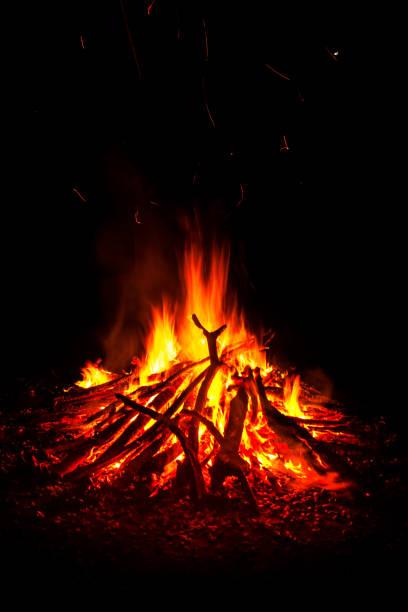
Long before Walpurgis Night carried the name of a saint, it existed in another form: a seasonal threshold. Across Indo-European Europe, the transition from winter into summer was marked by powerful rites of renewal. These spring festivals, most famously Beltane in the Celtic world, centered on fertility, protection, and the reawakening of the land. Communities lit bonfires, drove livestock between flames for purification, and engaged in ritual noisemaking to ward off harmful forces.
Fire held a dual purpose. It was both practical and symbolic: a cleansing force, a magical barrier against illness and misfortune, and a beacon signaling the return of light and life. These rituals were not isolated; rather, they formed part of a broader European pattern of marking liminal moments. Times when the world was in transition and therefore vulnerable. Walpurgis Night, in this sense, is not a singular invention but a regional expression of this ancient seasonal logic. It reflects a Germanic adaptation of wider spring rites, shaped by local landscape and belief.
The Saint Who Gave the Night Its Name
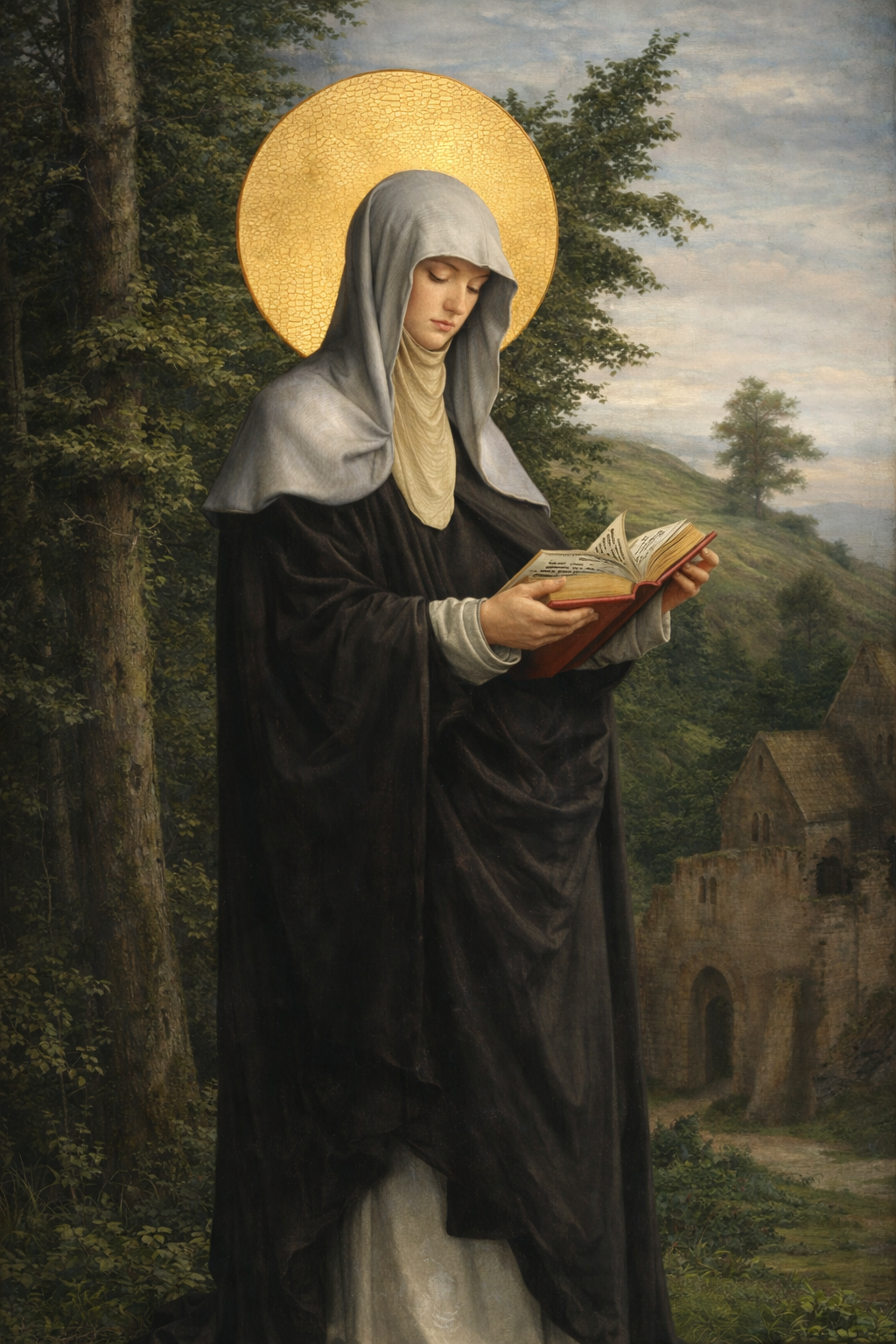
The name “Walpurgis” enters the story centuries later, through Saint Walpurga, an eighth-century English missionary who worked in what is now Germany. Canonized after her death, her feast day was set on May 1, precisely aligning with these existing seasonal celebrations.
This overlap was no coincidence. As Christianity spread, it often absorbed and reinterpreted local traditions rather than erasing them outright. By associating these spring rites with a saint, the Church provided a new framework through which communities could continue familiar practices.
Yet here lies one of the most fascinating contradictions of Walpurgis Night: while Saint Walpurga herself was invoked as a protector against evil, the night before her feast became associated with precisely the forces she was meant to repel. This paradox reflects the tension characteristic in religious syncretism. Older beliefs do not disappear, they shift, distort, and sometimes invert under new systems of meaning. Even today, people cannot wait for summer bonfires and barbeques while dancing the night away to music. Old, forgotten traditions still celebrated.
From Fertility Fires to Witches’ Sabbaths
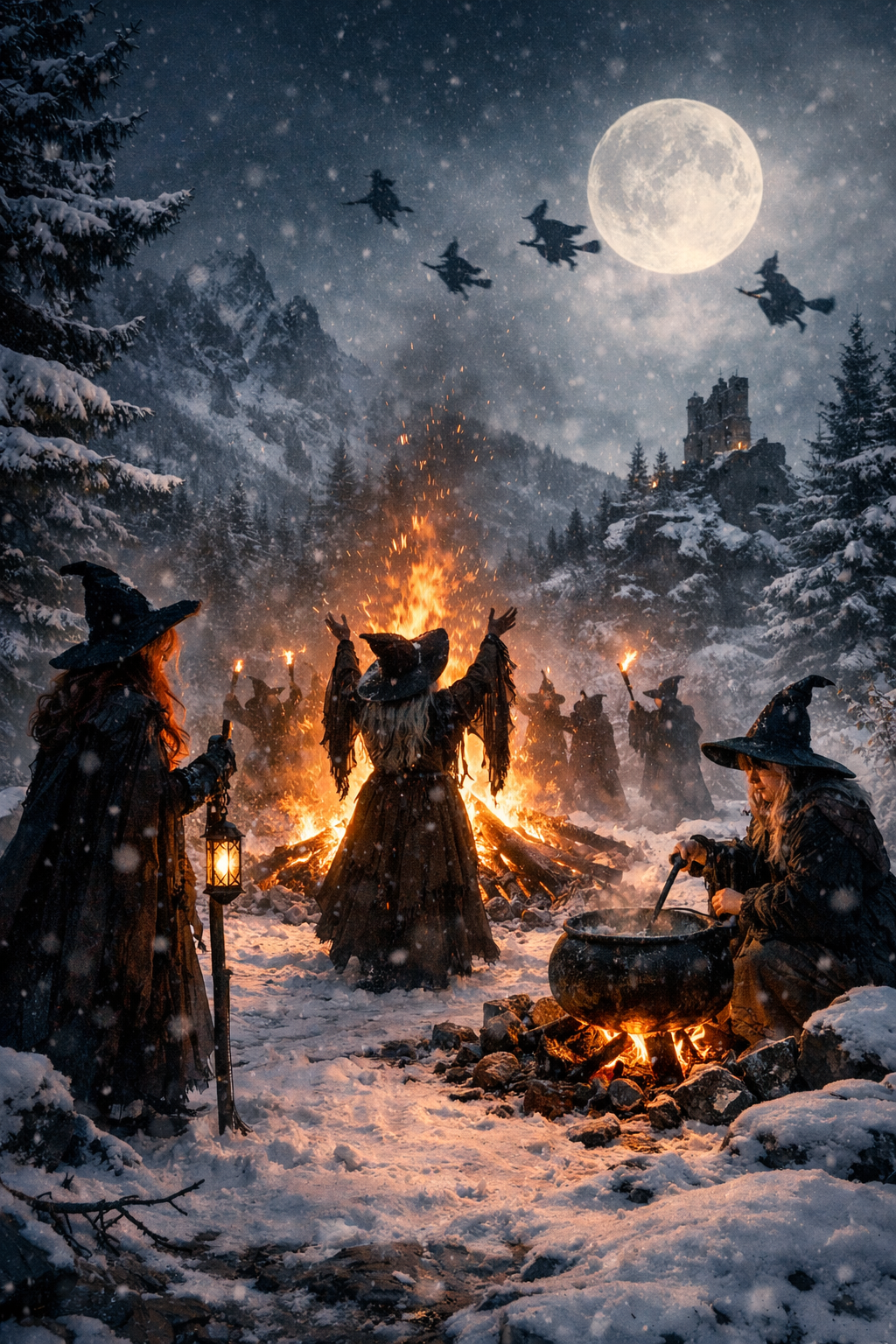
By the late medieval and early modern periods, Walpurgis Night had taken on a darker reputation. It became linked to the idea of the Witches’ Sabbath. Viewed as a supposed gathering of witches on remote mountaintops, most famously the Brocken in Germany’s Harz Mountains.
In folklore and trial records, this night was imagined as one of chaos and inversion: witches flying through the air, feasting with demons, and engaging in forbidden rituals. But historians caution against taking these accounts at face value.
There is little credible evidence that such gatherings ever occurred in the way they were described. Instead, these stories reveal more about the fears of the societies that produced them. During the witch trials of the 15th to 17th centuries, authorities projected anxieties about disorder, heresy, and social instability onto marginalized individuals. Particularly women.
Walpurgis Night became a symbolic stage for these fears. It was a convenient storyline container. A night associated with liminality and ritual inversion could easily be interpreted as a time of demonic activity. Because of this, the festival’s meaning shifted dramatically from protection against unseen forces to a night defined by them.

Women, Power, and Cultural Anxiety
The link between Walpurgis Night and witchcraft also reveals deeper cultural tensions, especially surrounding female agency. As usual!
Folklore from this period often portrays witches as powerful, transgressive figures. They were women who exist outside accepted social roles. Whether healers, widows, or simply outsiders, they became targets for suspicion. The imagery of women gathering in secret, wielding supernatural power, reflects anxieties about autonomy and control.
Modern scholarship interprets Walpurgis Night not just as a folkloric event, but as an example of fear and persecution of women. It has even become, in some contexts, a site of remembrance for victims of witch trials a reminder of how myth can be weaponized.
The Romantic Imagination: Goethe’s Walpurgis Night
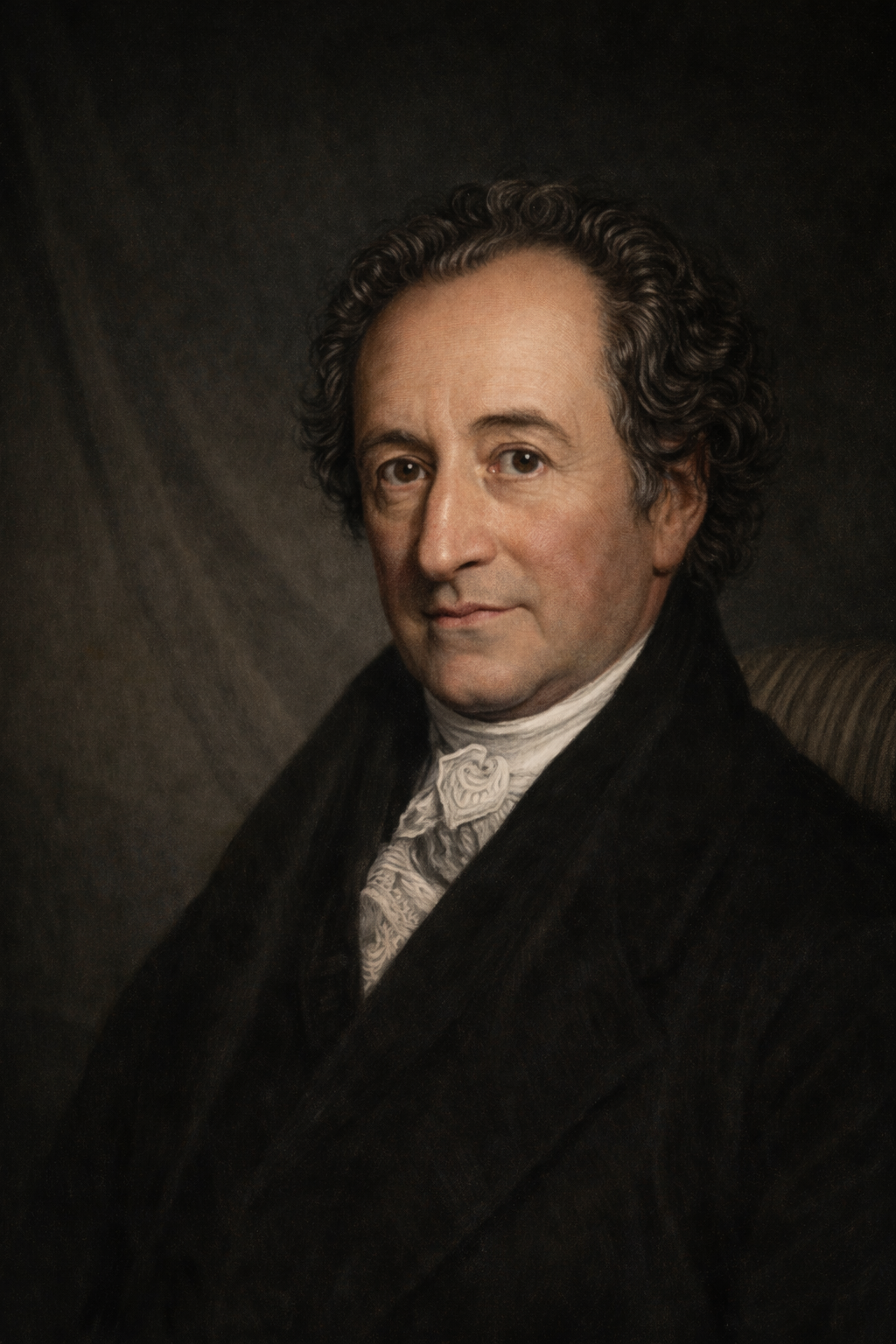
If early modern Europe gave Walpurgis Night its association with witchcraft, the Romantic era ensured its eternal cultural legacy. Johann Wolfgang von Goethe’s Faust features one of the most famous depictions of Walpurgis Night. Depicted as a surreal, chaotic sequence filled with mythological figures, grotesque imagery, and dreamlike transformations.
In Goethe’s hands, Walpurgis Night became something more than folklore. It became a psychological landscape, a space where rational order dissolved and the unconscious took over. Pagan gods, classical references, and carnival-like absurdity blended together, creating a vision of the night as a realm of pure imagination.
This literary transformation elevated Walpurgis Night into a symbol. No longer just a folk festival, it became a moment of chaos, creativity, and confrontation with the unknown.
Living Traditions: Fire, Noise, and Renewal
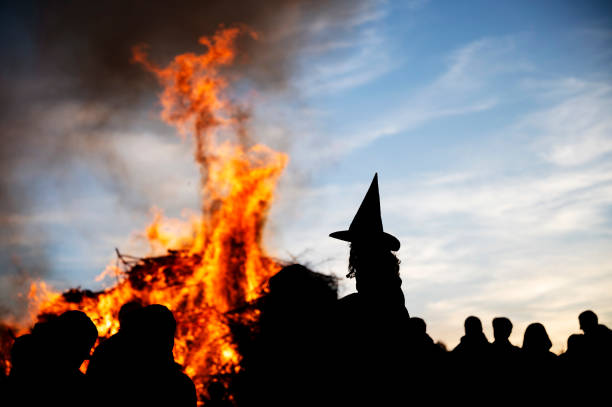
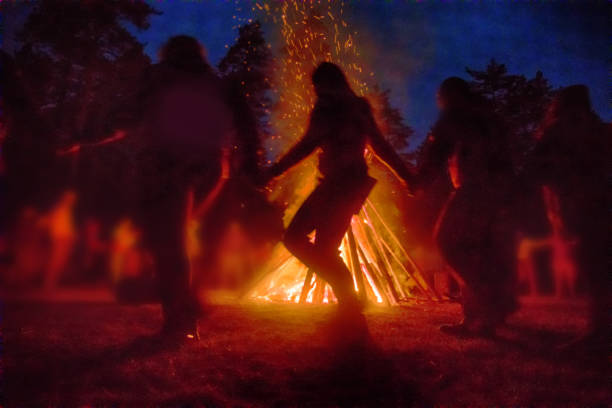
Despite its layered history, Walpurgis Night is still celebrated today, and many of its older customs remain intact. Bonfires continue to be lit across parts of Germany and Scandinavia, echoing ancient protective rituals. People gather to sing, dance, and welcome the coming of summer. Noisemaking, once intended to drive away spirits, persists in the form of music and celebration. Homes may be decorated with greenery, symbolizing renewal, and life.
These practices reveal something essential: even as meanings shift, the core experience of the festival remains rooted in transition. Walpurgis Night is still about crossing a threshold from darkness into light, from winter into growth.
One of the most important insights from modern study is that Walpurgis Night cannot be reduced to a single origin or meaning. It is not purely pagan, nor purely Christian. It is not simply a witches’ festival, nor merely a spring celebration. Instead, it is a cultural celebration of many layers written and rewritten over centuries.
At its heart, Walpurgis Night reflects a universal human impulse: to mark moments of change with ritual, story, and symbol. Each era has projected its own concerns onto the night fertility, faith, fear, imagination creating a tradition that is as complex as it is remaining.
Why Walpurgis Night Still Matters
For those drawn to folklore, especially the darker edges of it, Walpurgis Night offers something uniquely exciting. It is a night where boundaries blur: between past and present, sacred, and profane, fear and celebration. It reminds us that folklore is not static. It evolves, absorbing the anxieties and hopes of each generation.
And perhaps most importantly, it shows how easily meaning can shift. A night once meant to protect against unseen forces became, in time, associated with those very forces. Yet beneath it all, the fires still burn not for witches, not for saints, but for the human need to face the unknown together.
In that sense, Walpurgis Night is not a relic of European tradition. It is a living example of how we make sense of darkness and how we carry those stories forward into the light.


Comments (0)
Login or Register to leave a comment.