Cult of the Bean: The World's Largest Forgotten Religion

Every morning, millions of people perform the same ritual. They rise before dawn, shuffle silently through dimly lit kitchens, and prepare a bitter black potion from beans cultivated in distant equatorial lands. Only after consuming this sacred brew do, they become fully themselves. Families avoid conversation until the ceremony is complete. Offices grind to a halt without it. Entire cities seem incapable of functioning before the first cup. To us, it is simply coffee.
But imagine an archaeologist a thousand years from now, piecing together the fragments of our civilization. They would discover elaborate brewing devices, ornate ceramic vessels, portable shrines carried from place to place, and an astonishing number of written invocations devoted to a mysterious bean. They might reasonably conclude they had uncovered evidence of one of history's most successful religious cults. Perhaps they would not be entirely wrong.

Site 17A: North American Settlement, c. 2026 CE
Excavators uncovered a modest structure marked with a circular green sigil. Unlike nearby homes, the building contained no beds, tables, or domestic furnishings. Instead, a long altar dominated the interior where attendants operated intricate machines that hissed with steam before producing dark liquid offerings.
Visitors approached individually, recited highly personalized incantations.
"Half-caf. Oat milk. Two pumps vanilla."
After exchanging small tokens of value, each received a sacred vessel containing the steaming brew. Many lingered inside the temple, speaking quietly with fellow initiates before returning to the outside world with noticeably improved spirits and renewed energy.
Researchers concluded these shrines served both ceremonial and restorative functions. Their remarkable abundance suggests the cult held enormous influence over daily life.

The Morning Rite
Almost every household possesses the tools required for the ritual. Some favor elaborate brass contraptions requiring careful measurements and precise temperatures. Others trust automated machines that awaken before their owners. Regardless of method, the objective remains unchanged: transform roasted beans into a dark elixir capable of banishing exhaustion and summoning wakefulness. The iconography of this devotion is everywhere.
Symbols of steaming cups decorate clothing, walls, greeting cards, and household ornaments. Humorous warnings circulate depicting worshippers before and after their first cup, implying that without the ritual they become barely recognizable. Entire songs celebrate the bean. Businesses promise salvation through caffeine. Travelers seek out famous temples wherever they roam. We rarely question any of it because we participate ourselves. Yet our coffee temples have ancestors stretching back centuries.
The Penny Universities
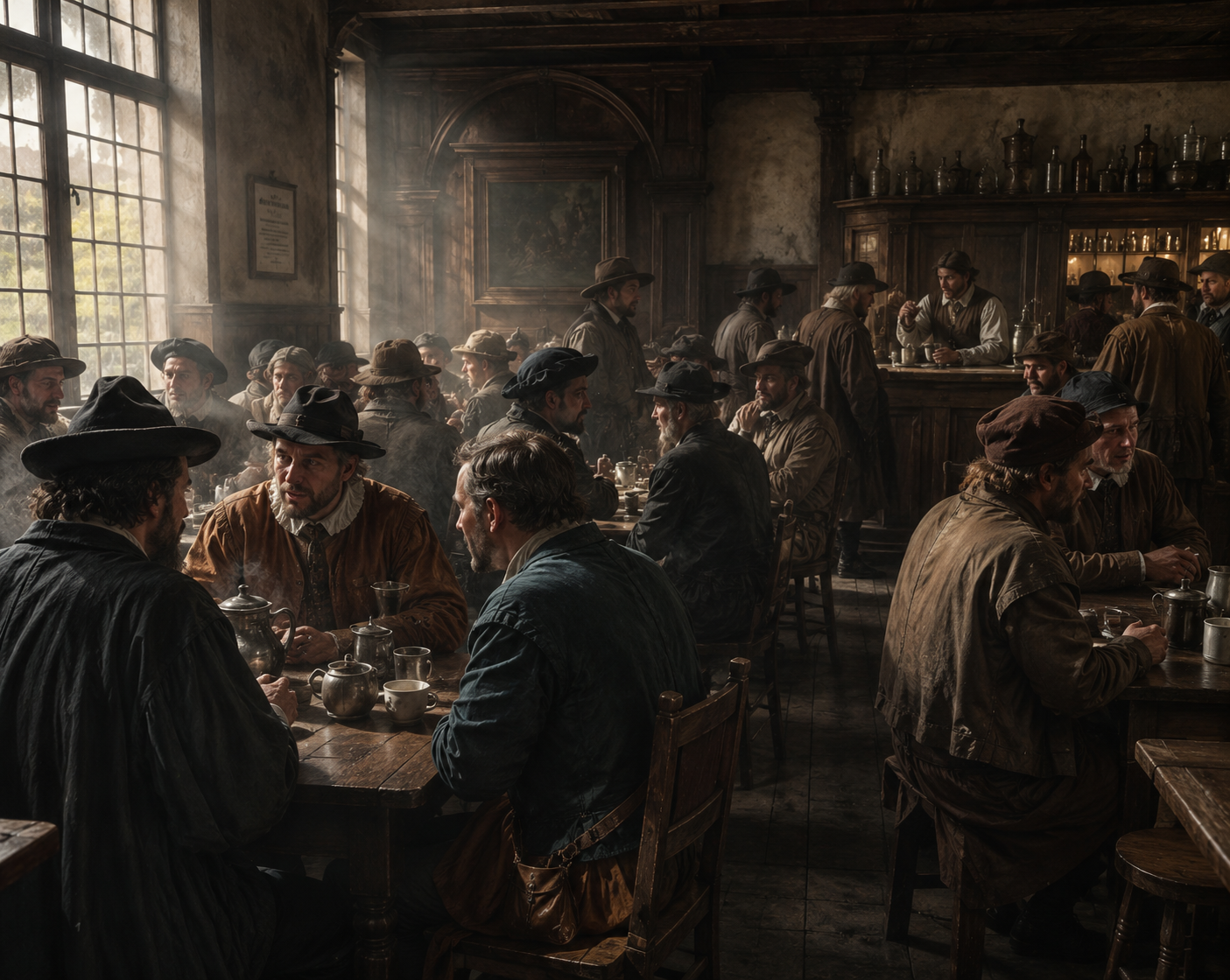
Long before modern cafés became remote offices and social spaces, coffeehouses were centers of intellectual revolution. Seventeenth-century Europe called them penny universities because, for the price of a single cup, anyone could spend hours listening to discussions of philosophy, politics, science, and literature. In a deeply divided society, these establishments became unusual places where merchants, scholars, craftsmen, and gentlemen might all share the same table.
The first English coffeehouse opened in Oxford in 1650, attracting academics dissatisfied with university formalities. Soon similar establishments spread across London, becoming places where ideas travelled faster than official institutions could contain them.
Isaac Newton reportedly frequented coffeehouses. John Dryden did the same. Lloyd's Coffee House eventually evolved into Lloyd's of London, while Jonathan's Coffee House helped lay the foundations of the London Stock Exchange. The bean was no longer merely a drink. It had become fuel for revolutions of the mind.
All Hail the Bean
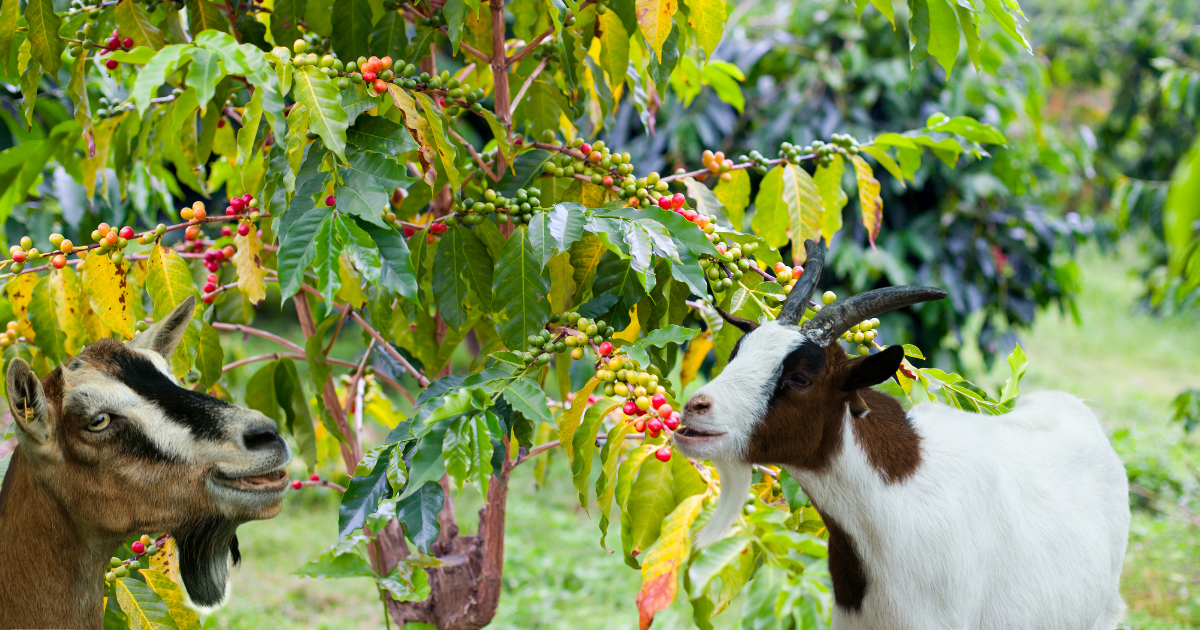
Coffee's story begins much earlier. Legend tells of an Ethiopian goatherd named Kaldi, who noticed his goats dancing wildly after eating bright red berries from an unfamiliar shrub. Curious, local monks experimented with the fruit, discovering it helped them remain awake during long hours of prayer.
Whether Kaldi ever existed remains uncertain, but coffee's Ethiopian origins are well supported. From there, the plant travelled across the Red Sea into Yemen, where it became entwined with one of history's most fascinating mystical traditions. The Sufis. These Islamic mystics embraced coffee as a spiritual aid, drinking it during lengthy ceremonies of prayer, chanting, and meditation. The beverage allowed practitioners to remain alert through nights of devotion, transforming an ordinary plant into something approaching a sacred substance.
Authorities viewed the unfamiliar drink with suspicion. Some feared it possessed intoxicating properties like wine. Others believed gatherings inside coffeehouses encouraged dangerous political discussions. After investigations concluded that coffee sharpened rather than clouded the mind, the drink spread rapidly across the Islamic world before eventually conquering Europe. Not every cult is forbidden because it dulls the senses. Some become dangerous because they awaken them.
Caffeinated Clairvoyance
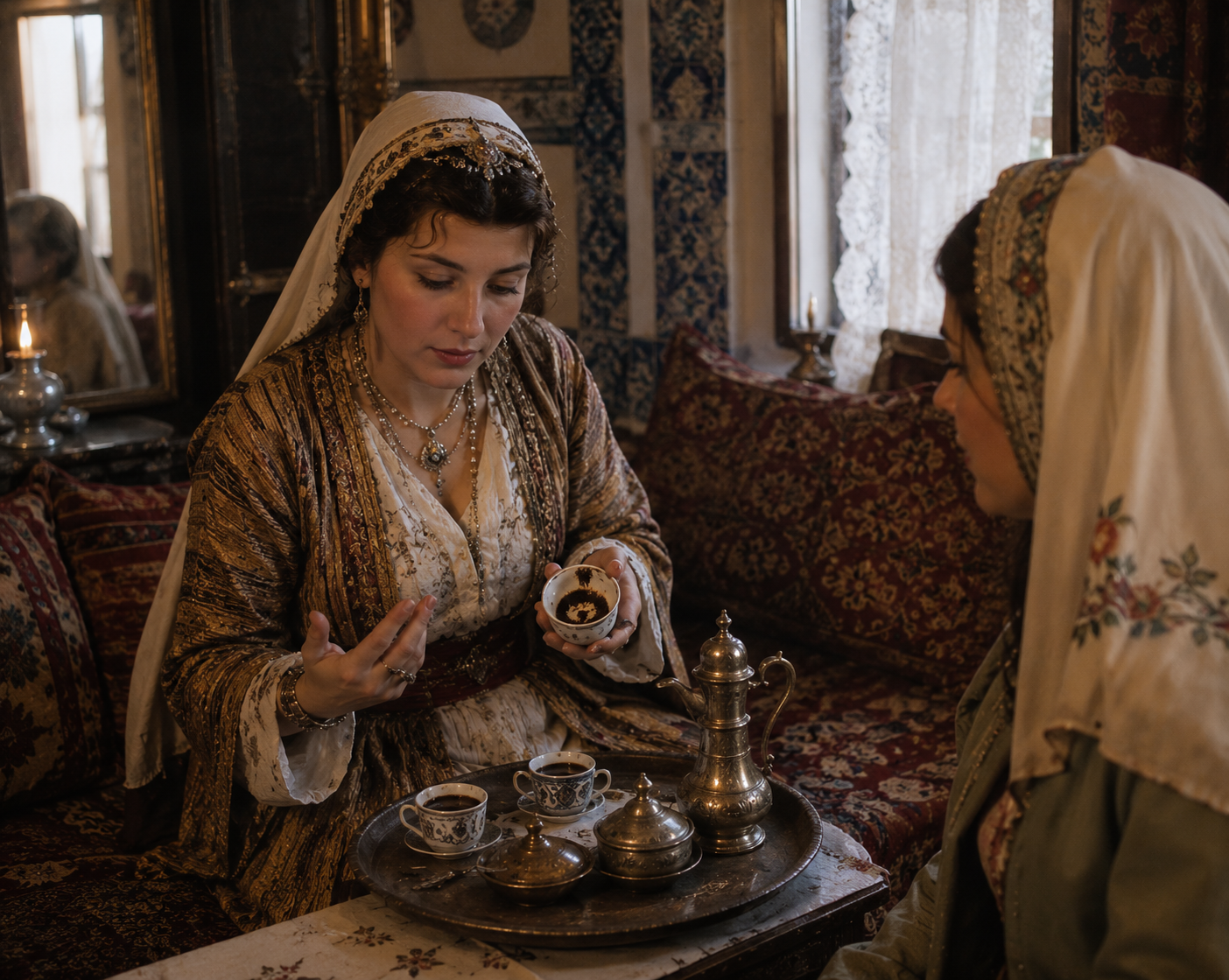
Coffee did not merely inspire conversation. It also became a tool for divination. In Ottoman Turkey, women developed the practice of reading coffee grounds after a cup had been finished. The remaining sediment formed shapes interpreted as messages about love, fortune, betrayal, illness, or unexpected visitors. Mountains signified obstacles. Birds carried news. Snakes warned of deception. Known as tasseography, the practice survives today throughout parts of Turkey, Greece, and the Balkans.
One persistent legend claims a woman in the Ottoman Empire could divorce her husband if he failed to provide her daily coffee. Historians debate whether this existed as formal law or powerful custom, but the story itself reveals something remarkable. Coffee had become more than nourishment. It had become a necessity.
The Boston Coffee Riot
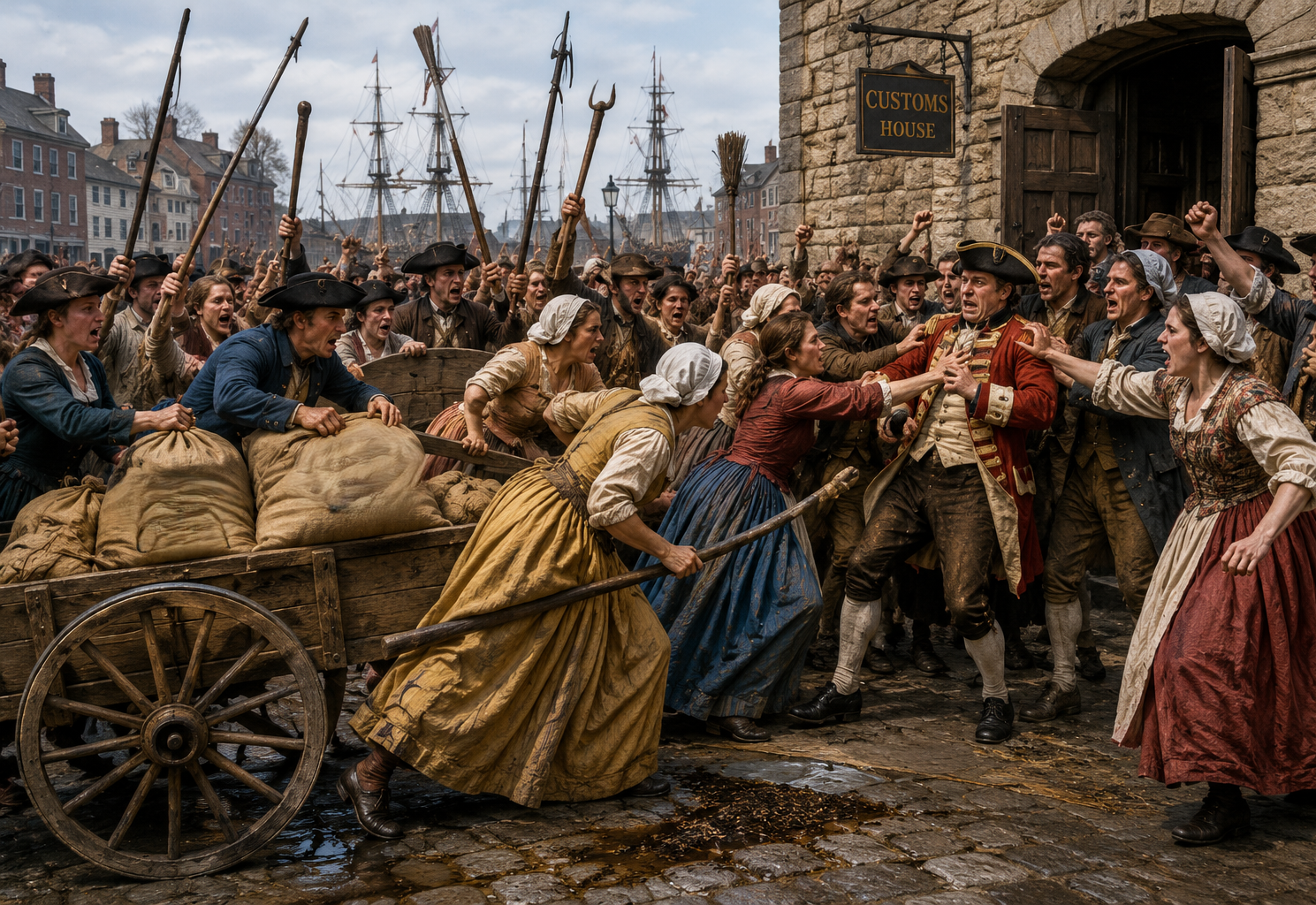
History remembers the Boston Tea Party. Far fewer remember America's growing devotion to coffee. Following the destruction of British tea in Boston Harbor, many colonists deliberately abandoned tea in favor of coffee as an act of political resistance. Wartime shortages soon transformed coffee into a scarce and precious commodity.
According to period accounts, merchant Thomas Boylston attempted to exploit the shortage by hoarding supplies and driving up prices. The response was swift. More than one hundred women marched to his warehouse, demanded access to the stockpile, and redistributed the coffee throughout the community at fair prices. Abigail Adams later described the remarkable event in correspondence with her husband. The bean, once again, inspired collective action.

Folklore of the Everyday
Every generation believes it inhabits an ordinary world. History suggests otherwise. Medieval Europeans carried charms against invisible spirits. Victorians photographed their dead. Ancient Romans consulted the flight of birds before making political decisions. Our own customs appear perfectly rational only because we live among them.
One day, future generations may wonder why humanity consumed enchanted bean potions before beginning any meaningful work. They may puzzle over why we travelled to dedicated temples each morning, spoke in strangely specific formulas, and spent extraordinary sums on roasted seeds imported from the other side of the world.
Perhaps they will conclude that coffee was the central sacrament of an immense global religion. Or perhaps they will recognize something deeper. The greatest lesson of folklore is not that our ancestors believed strange things. It is that, eventually, every ordinary habit becomes someone else's ancient mystery.
And somewhere in the distant future, an archaeologist may carefully brush the dust from a chipped ceramic mug, read the faded words "Don't talk to me until I've had my coffee," and record in their notebook: "Evidence suggests the cult remained active until the very end."


Comments (0)
Login or Register to leave a comment.