The Empty Grave of Dracula

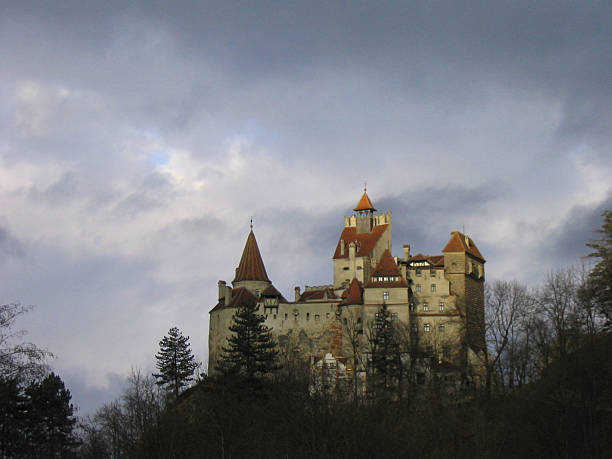
Bran Castle, a Medieval Stronghold built by the Saxons in the Carpathian Mountains. Here, the mist does not rise from the valley floor; it spills from the ancient limestone teeth of the Carpathian Mountains like breath on a freezing winter morning. As twilight falls, the mountains shift from a green refuge to something far wilder and imposing. The shadows lengthen across the jagged peaks of the High Tatras and the deep valleys of Transylvania. This is the hour when the true masters of the Carpathians wake.
The road through the mountain pass narrows, squeezed by the sheer rock walls of the Southern Carpathians, until the trees suddenly part to reveal the jagged crown of Bran Castle. It does not sit quietly upon its hill; it erupts from the gray limestone rock like an extension of the cliffside itself. From below, its towers loom against the bruised Transylvanian sky, all sharp angles, weathered terracotta tiles, and narrow slit windows designed for archers who scanned these valleys centuries ago. The stone walls, stained dark by centuries of mountain rain and mountain mist, look entirely impenetrable.
Each year, 800,000 visitors brave this wilderness just to say they were there. But why? If you are unfamiliar with Bran Castle allow me to introduce its most famous inhabitant: Vlad Dracul (aka Vlad the Impaler, Vlad Tepes, and most famously, Dracula).
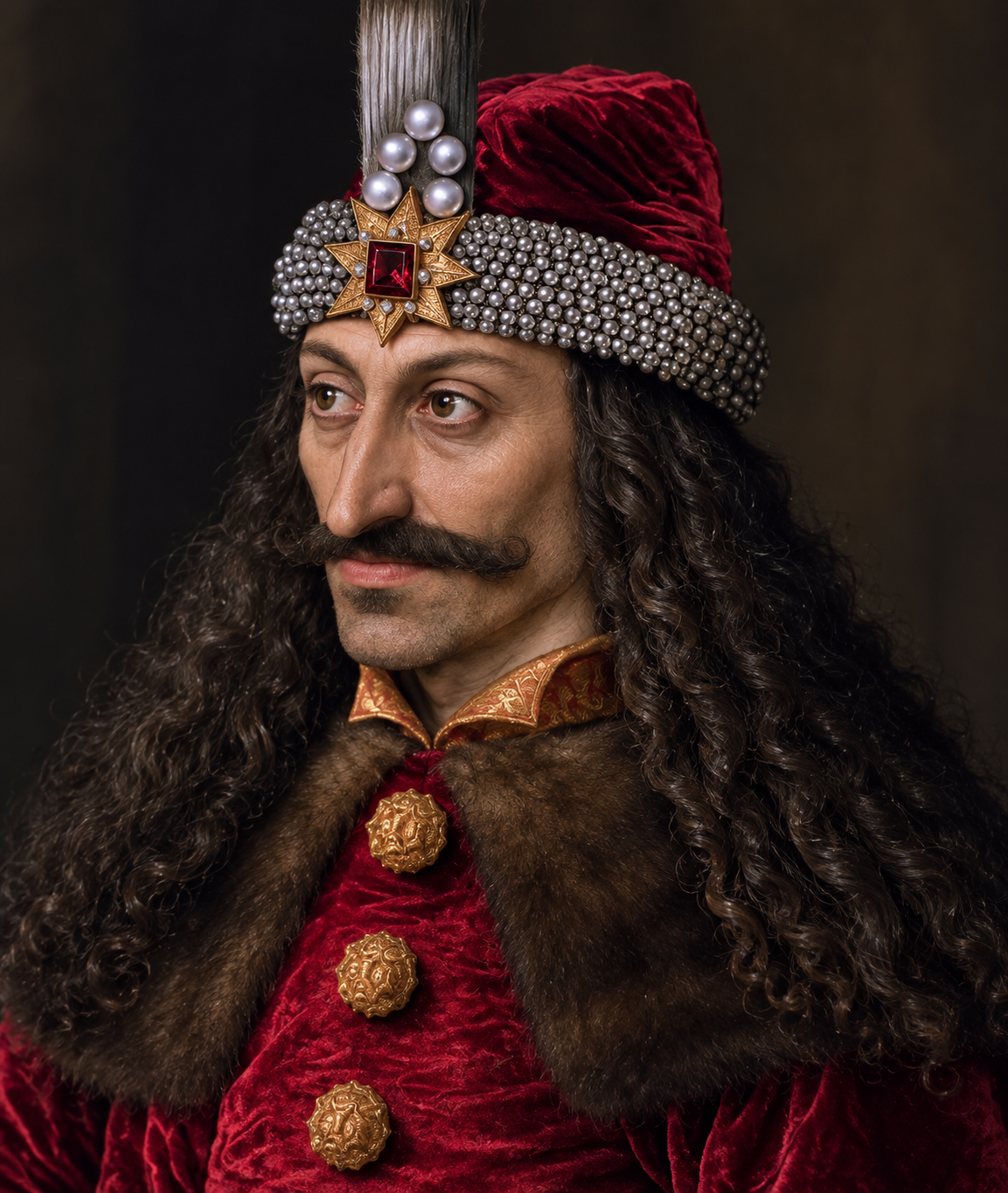
Who Was Vlad Dracul?
Once upon a time, deep in the misty Carpathian Mountains, there lived a man named Vlad III, a prince whom history would come to call Vlad the Impaler. Born around 1431 into the House of Drăculești as the son of Vlad II Dracul, he rose to become Voivode, or warlord, of Wallachia, and he took the throne not once but three times (in 1448, from 1456 to 1462, and again in 1476). In the chronicles of his age, he was a stern ruler who fought to strengthen the crown, crush the power of the scheming boyar nobility, and hold back the growing might of the Ottoman Empire. Yet around the fires of the countryside, the folk told very different tales of him.
Vlad was only the second son of Vlad Dracul, who had seized the Wallachian throne in 1436, and his early years were shadowed by the bitter rivalry between Wallachia and Hungary. That rivalry turned deadly when his father and elder brother were murdered at the urging of the Hungarian regent, who then placed Vlad's cousin on the throne. Vlad bided his time, and with Hungary's backing, he eventually returned, slew his cousin, and reclaimed what he believed was his by right. Determined never to be betrayed again, he turned on the Wallachian nobles who might threaten him, purging them one by one. And his favorite way of dealing with his enemies? He impaled them.
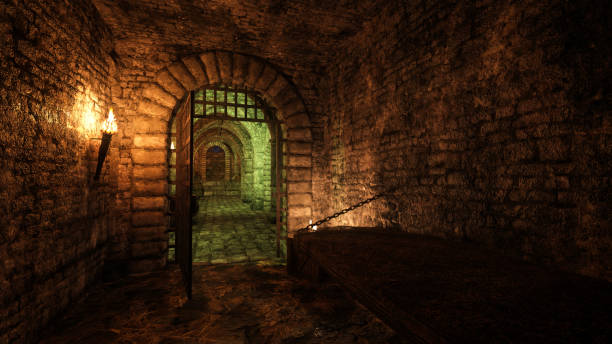
Imprisoned
With peace finally restored to his homeland, though bought at a horrific price in blood, Vlad turned his gaze toward a far greater foe. The mighty Sultan Mehmed II, ruler of the Ottoman Empire, sent word that Vlad must come before him in person and pay homage, as a vassal should to his master. Vlad refused to bow. Instead, he crossed the Danube into Ottoman lands and fell upon them without mercy, and when the bloody winter campaign was over, tens of thousands lay dead in his wake.
The Sultan answered with an army, and Vlad, outnumbered, made a bold and desperate gamble. He led a daring night raid on the Ottoman camp to capture or kill the Sultan himself. The attempt failed, and many of Vlad's followers lost faith in him and went over to his younger brother, Radu. With his support gone, Vlad fled to Transylvania to beg the Hungarian King for help, but instead of an ally he found a prison cell. Years later he was released, with Stephen III of Moldavia backing his return, but his freedom came at a price, because he was made to give up his Eastern Orthodox faith and accept Roman Catholicism.
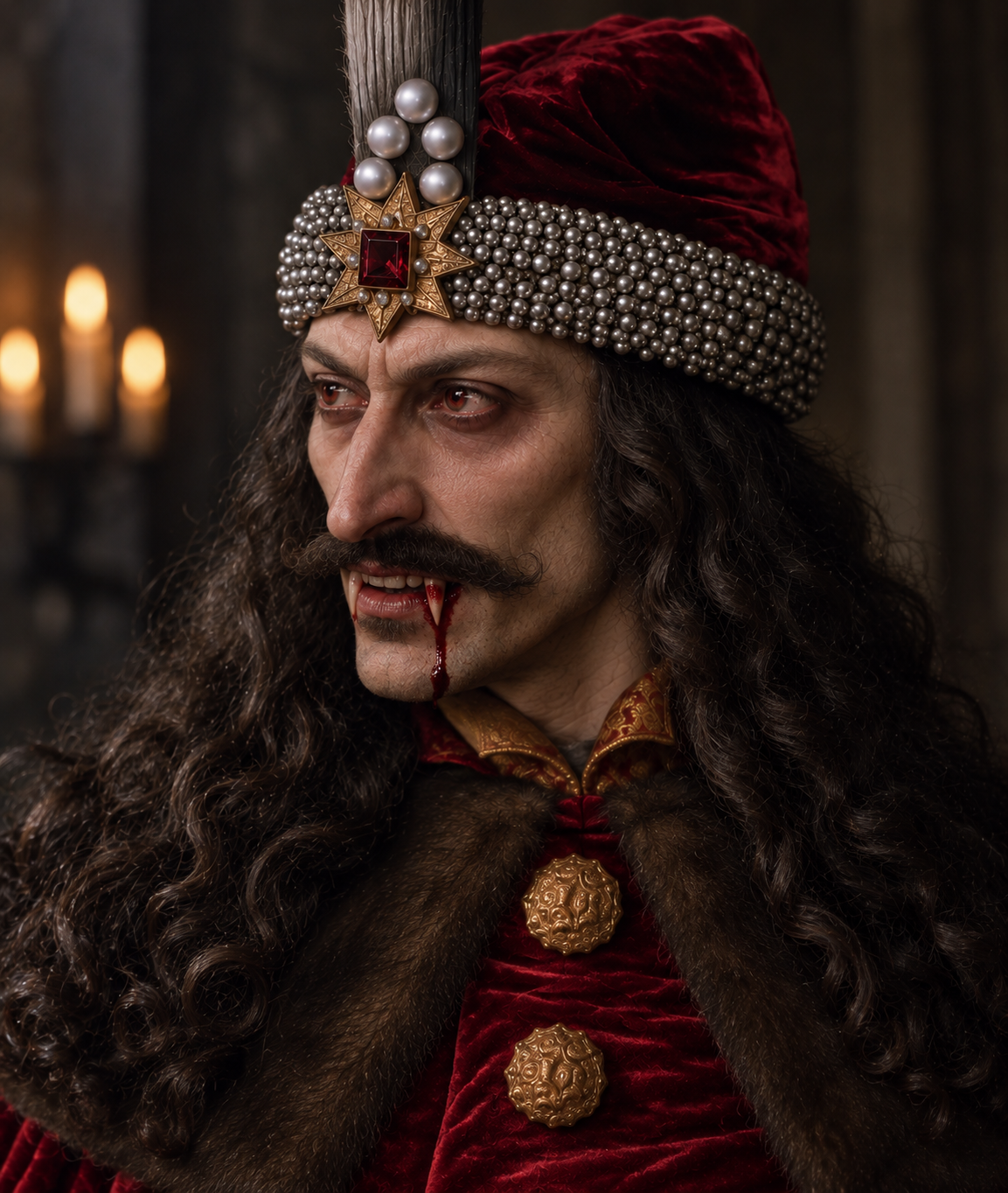
From Man to Vampire
While Vlad sat locked away in his Hungarian prison, the tales of his cruelty slipped past the walls and traveled far beyond Wallachia. Soon people in the towns of Germany and Italy were whispering about the prince who impaled his enemies by the thousands. Printers in Germany and the German-speaking lands turned his deeds into pamphlets, and these grisly stories became some of the very first bestsellers of the printing age. Far to the east in Russia, the storytellers painted a different picture, one of a hard ruler whose brutal punishments kept his land strong and orderly. As the centuries rolled on, his legend kept spreading across Europe, and by the 1800s it had grown so large that many came to believe it inspired Bram Stoker's Dracula.
Stoker never names Vlad in his famous novel, yet the dark prince seems to haunt its pages all the same. In one passage, the Count speaks of a Dracula who was a Wallachian Voivode, the very title Vlad once held, in the years around 1460. The tale goes on to tell how this Voivode led his armies across the Danube to strike at the Turkish troops, just as Vlad had done. Of course, the real Vlad was a man of flesh and blood, not a creature of the night. He wasn't really a vampire. Right?
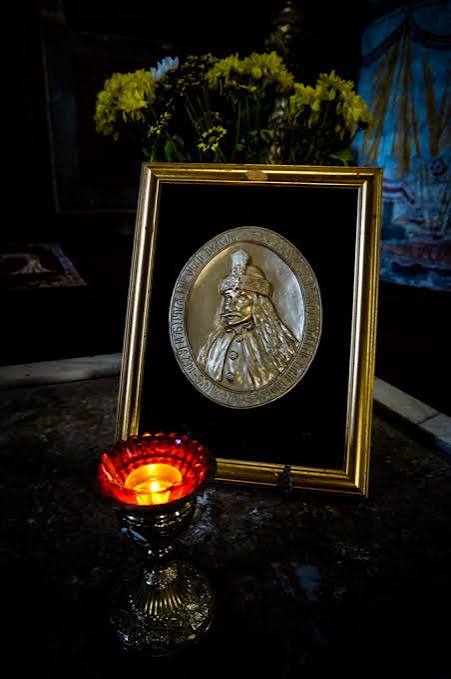
The Mystery of the Missing Body
Around the winter of 1476 or 1477, the long and bloody life of Vlad III came to its end. He is believed to have fallen during a campaign near Snagov, in what is now Romania, though no one can say for certain where his body was laid to rest. For generations, the quiet island monastery of Snagov has claimed him as its own, while the monastery at Comana has whispered its own claim. Yet neither has ever proven beyond doubt that the Impaler sleeps within its walls.
The legend of his grave at Snagov is younger than most people imagine. The earliest written version of the tale seems to come from the middle of the nineteenth century, nearly four hundred years after Vlad's death. Two centuries before that, in the mid to late 1600s, the Cantacuzino Chronicle had already tied Vlad Țepeș to the building of Snagov Monastery. Strangely, though, the old chronicle says nothing at all about him being buried there.
By 1855, the Romanian writer and scholar Alexandru Odobescu was digging into Snagov's past, and he had begun to doubt that Vlad had founded the monastery at all. Then, in 1861, someone wrote down a curious tradition kept by the monks. They said that a plain, unmarked stone inside the church covered the grave of the dead prince. The stone had been placed just so, they explained, so that the priests would tread upon it each day, and with every step, Vlad's punishment for his many sins would be eased a little.
In 1933, the archaeologist Dinu V. Rosetti finally lifted the mystery stone and dug beneath it. What he found was no prince at all, and no human burial of any kind. There was only an older pit, filled with animal bones and broken pottery. Perhaps that should not surprise us. The Snagov story was first written down in the very same century that Gothic writers across Europe were turning old vampire folklore into the elegant, bloodthirsty vampire of modern fiction.
A Prince Who Would Not Stay Buried
With no body, no certain grave, and no final word from history, the death of Vlad III left a silence, and legends rushed in to fill it. In the villages of Romania, people had long told stories of the strigoi, restless spirits of the dead who were said to rise from their graves and trouble the living. No chronicle of Vlad's own time ever named him as one of these creatures. Still, it is easy to see how a prince so feared in life, and so lost in death, could one day be pulled into the same shadowy world as the tales whispered beside the fire.
Over the centuries, every land that remembered Vlad told his story in its own way. In the German-speaking world, printed pamphlets spread tales of his monstrous cruelty far and wide. In some Slavic accounts, he was a hard but effective ruler who kept order through fear. In Romania, he was remembered most of all as a defender who stood against the Ottoman tide and fought to hold his country together. And yet, through every version of the tale, one thing remained the same. The man whose name would one day stand for the undead was, once again, nowhere to be found. The real mystery isn't whether he died or where his body is. It's how his story managed to outlive him so spectacularly.


Comments (0)
Login or Register to leave a comment.