Why Do Ghosts Wear Sheets?

The haunting sound of moans and groans drifts through a darkened hallway. A cold breeze brushes past your shoulder. The floorboards creak. Something is coming.
Closer...
Closer...
And suddenly. It appears!
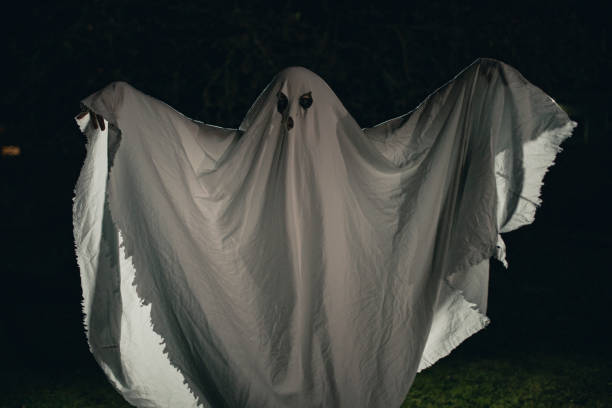
A white bedsheet with three holes cut into it floats menacingly down the hall. Terrifying. Well...perhaps not anymore.
The sheet-covered ghost has become one of the most recognizable, and frankly ridiculous, images of the supernatural. Toss a white sheet over your head, cut out two eyeholes, and congratulations: you are now approximately 70 percent of all Halloween decorations.
But any respectable paranormal investigator will tell you that ghosts do not wander around wearing bed sheets. Or do they? Because unlike many modern Halloween clichés, the sheet ghost actually has a surprisingly long and rather macabre history. And it begins with a corpse.
A Sheet as Old as Time
Ghosts have been depicted wrapped in white cloth since at least the Middle Ages. Medieval illustrations from the thirteenth through fifteenth centuries sometimes portrayed the returning dead as skeletons or human figures wrapped in pale cloth. To medieval audiences, however, this was not necessarily a costume.
It was burial clothing. The connection between ghosts and white sheets became recognizable enough that by the fifteenth and sixteenth centuries, living people were reportedly using white cloth to impersonate spirits.
Thieves could frighten potential witnesses away. Pranksters could terrify their neighbors. Apparently, humanity discovered almost immediately that if people believe the dead are walking around at night, there is always going to be one idiot who thinks: I could probably use this. Some things never change.
The Shroud of Death
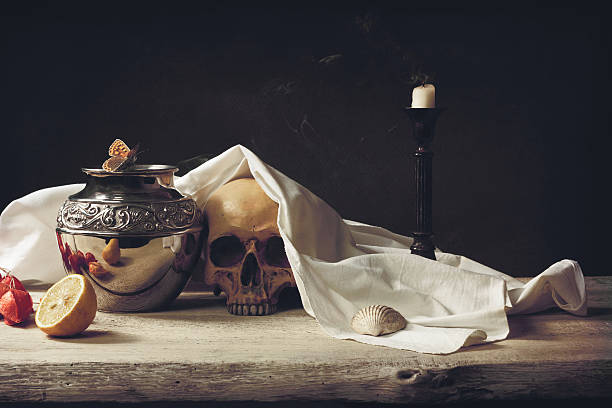
For much of European history, being buried inside an elaborate coffin was not something everyone could expect. Coffins required materials, craftsmanship, transportation, and money. For poorer families, the dead might instead be prepared for burial using a simple shroud, sometimes called a winding sheet.
The body was washed, wrapped in cloth, and secured at the head and feet. In some circumstances, the fabric could even come from the deceased person's own bed. Imagine the appearance.
A human form wrapped tightly in pale cloth. The outline of the head and shoulders still visible beneath the fabric. The material gathered and tied around the body. Now imagine that figure standing at the end of a dark medieval road.
Suddenly the sheet ghost becomes considerably less adorable. When people imagined the dead returning from the grave, they naturally pictured them wearing what they had been buried in. The ghost was not wearing a sheet because someone thought it made a good Halloween costume.
The ghost was wearing a burial shroud. As coffins and caskets became increasingly accessible during the eighteenth and nineteenth centuries, helped along by the growing funeral industry and an increasingly fashionable terror of premature burial the winding sheet slowly disappeared from ordinary burial customs. But by then, the image had already escaped the grave. The shrouded ghost had entered folklore.
A Ghostly Crime
And sometimes that folklore had very real consequences. During the winter of 1803, residents of Hammersmith, then on the outskirts of London, became convinced that something supernatural was stalking the neighborhood.
Witnesses described a strange white figure wandering the streets at night. According to contemporary accounts, the supposed apparition did more than simply materialize dramatically beside the road. It reportedly chased, grabbed, and attacked unfortunate pedestrians before disappearing into the darkness.
A contemporary account in Kirby's Wonderful and Scientific Museum described the creature as being so clever and nimble in its retreats that no one could successfully track it. Naturally, the neighborhood reacted in the calm and measured manner one expects when rumors of a violent ghost begin circulating.
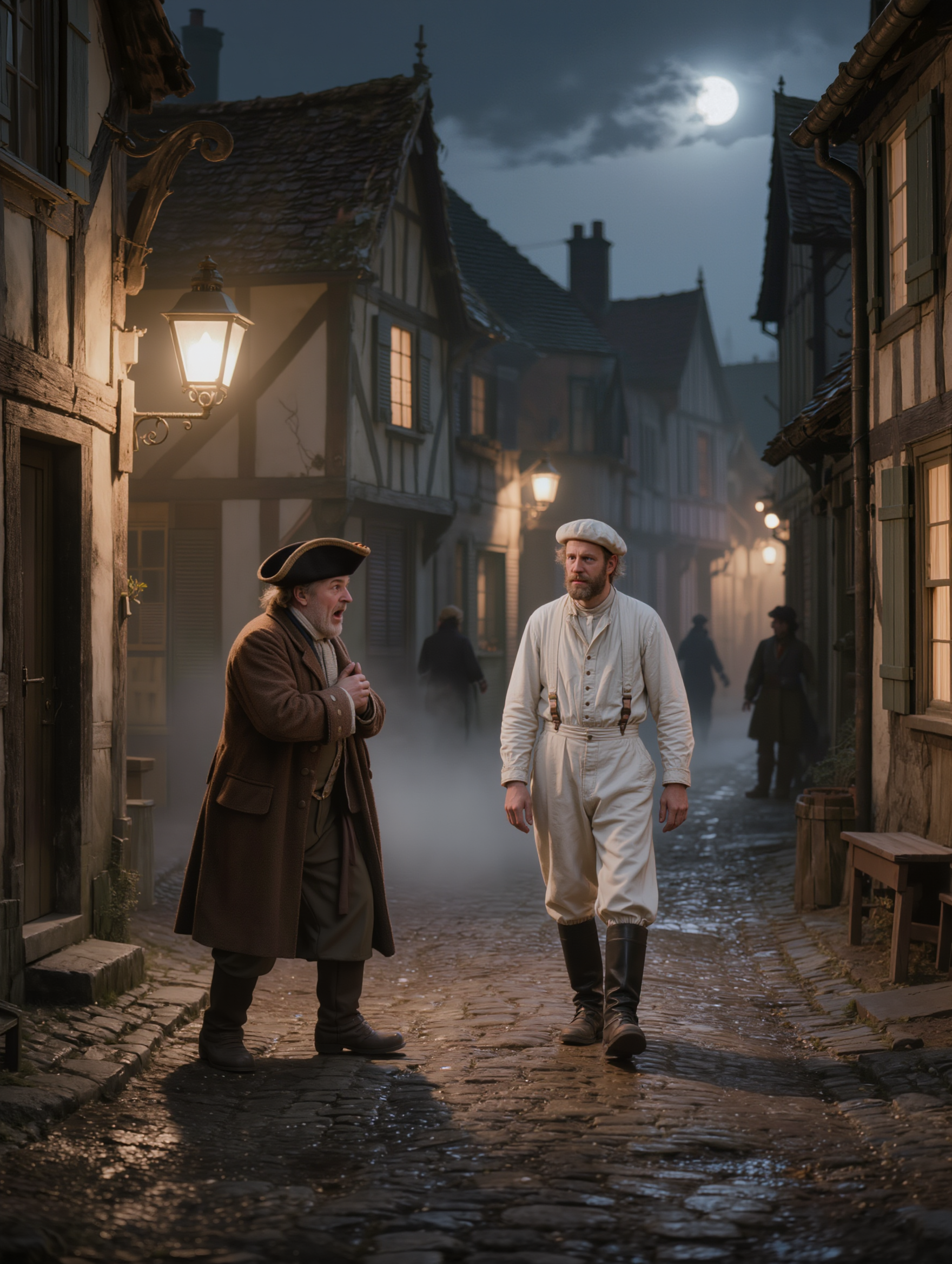
Armed men started patrolling the streets. This went about as well as you might expect. On the night of January 3, 1804, customs officer Francis Smith was searching for the supposed ghost when he encountered bricklayer Thomas Millwood walking home.
Millwood was wearing the white clothing associated with his trade. Smith apparently saw a pale figure approaching through the darkness and concluded that he had finally found the Hammersmith Ghost. He shot him. Millwood died.
The grim irony was that Millwood had reportedly been mistaken for the ghost before. His pale work clothes had frightened other residents, and he had apparently been warned that wandering around Hammersmith dressed entirely in white during a neighborhood ghost panic might not be the wisest fashion decision. Unfortunately, his final encounter proved fatal. Smith was arrested and tried for murder. He was initially sentenced to death, though the sentence was later commuted. As for the actual Hammersmith Ghost? Well...
That remains considerably murkier. Rumors circulated that someone had deliberately been impersonating the apparition. Various suspects and explanations emerged, but the precise origin of the haunting was never established with complete certainty.
Whether Hammersmith was haunted by a ghost, a prankster, mass hysteria, or some combination of the three the episode demonstrated something important: By the beginning of the nineteenth century, people already knew exactly what a ghost was supposed to look like. White. Shrouded. And wandering around after dark where it absolutely did not belong.

From Haunts to Hollywood
If the Hammersmith Ghost demonstrated how terrifying a white figure could be, the twentieth century discovered something else. Sheet ghosts were funny. As animation and cinema developed, filmmakers needed visual symbols audiences could recognize instantly. A white sheet floating through a room required no explanation. Ghost. Done.
In Walt Disney's The Haunted House (1929), Mickey Mouse finds himself surrounded by animated skeletons and bed sheets springing eerily to life. Other early animators embraced similar imagery. The Fleischer brothers' wonderfully bizarre Bimbo's Initiation (1931) turned supernatural imagery into surreal slapstick.
The ghost was undergoing something of an image rehabilitation. The terrifying burial shroud of medieval Europe was becoming a comedy prop. Then came perhaps the ultimate domestication of the dead. Casper the Friendly Ghost.
Introduced during the 1940s, Casper retained the familiar rounded white appearance of the traditional ghost, but there was truly little horrifying about him. Casper did not want vengeance. He did not want to drag anyone screaming into the grave. He wanted friends.
Which, admittedly, is a rather dramatic career change for a supernatural entity whose ancestors had spent centuries appearing beside deathbeds and terrifying travelers. By the mid-twentieth century, the sheet ghost had become harmless. Cute, even.
The dead had officially entered children's entertainment. The Cheapest Halloween Costume in History. There is another reason the sheet ghost survived. It is spectacularly easy. No elaborate costume required. No makeup. No plastic fangs. No rubber mask that smells vaguely like a chemical factory. You need an old bed sheet and a pair of scissors. Preferably an old bedsheet.
Please ask whoever does the laundry before cutting holes in the good linens. Generations of children have discovered this independently, which has helped transform the ghost from an image of medieval death into one of Halloween's most enduring symbols. And yet something ancient remains underneath all that silliness.
The Sheet Ghost Lives
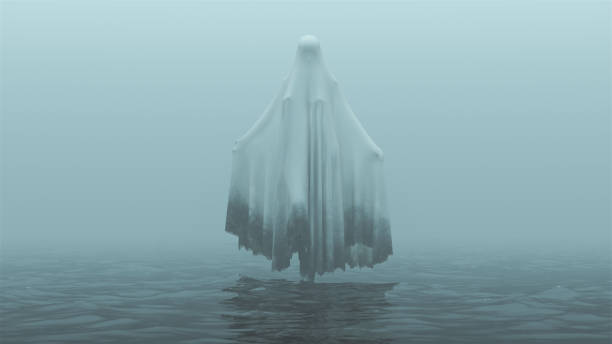
The sheet ghost survives because it occupies a peculiar space between the sacred and the ridiculous. It is simultaneously a burial shroud, a folkloric apparition, a cartoon character, a Halloween decoration, and something your sibling constructed five minutes ago because they found a blanket.
More importantly, the sheet solves one of the fundamental problems humans have always faced when depicting ghosts: How do you draw something that is supposed to be invisible? The sheet gives the invisible a shape.
It hides the body while simultaneously revealing its outline. Something is underneath but we cannot see exactly what. And perhaps that is why the image remains strangely effective. Because beneath the cartoon eyes and Halloween jokes lies a much older idea.
Once, our dead really were wrapped in sheets. Those sheets disappeared beneath the earth. And when people imagined the dead returning... they imagined them exactly as they had last seen them. Wrapped in white.
So, the next time someone throws a bedsheet over their head and announces ooooOOOoooo, give them a little credit. They are not merely wearing the cheapest Halloween costume imaginable. They are participating in a visual tradition that stretches back centuries. Although if an actual sheet-covered figure starts drifting toward you down a dark hallway... perhaps ask a few questions before shooting it. History has already tried that. It did not go particularly well.


Comments (0)
Login or Register to leave a comment.