The Headless Horseman

Some legends never truly fade. They simply wait beside lonely roads, hidden beneath ancient trees, until the sound of approaching hoofbeats reminds us they were never gone at all. Few American ghost stories are as recognizable as The Legend of Sleepy Hollow, yet beneath Washington Irving's famous tale lies something much older.
Long before Ichabod Crane nervously rode through the Hudson Valley on an autumn evening, headless riders were already galloping through the folklore of Europe, warning travelers that some encounters cannot be escaped. Perhaps that is why Irving's story has endured for more than two centuries. It does not simply tell a ghost story. It awakens something ancient buried within our collective memory.
A Hollow Filled with Whispers
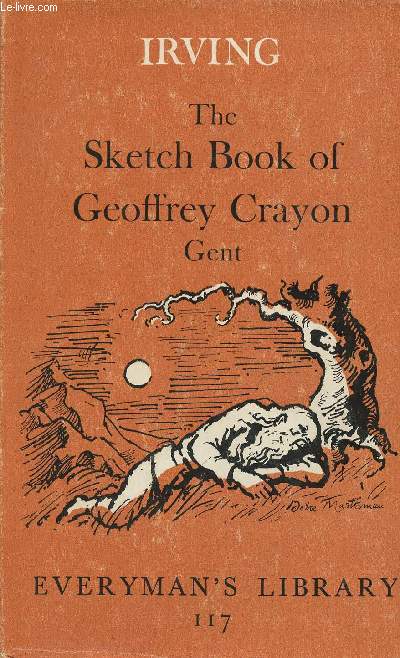
Published in 1820 as part of The Sketch Book of Geoffrey Crayon, Gent., The Legend of Sleepy Hollow became one of America's earliest works of fiction and remains one of its greatest ghost stories. Washington Irving wrote the tale while living in England, yet he rooted his story in the quiet Dutch settlements surrounding Tarrytown, New York, around the year 1790.
Sleepy Hollow was described as peaceful, picturesque, and strangely untouched by time. It was a place where mist settled heavily over fields, where forests seemed unnaturally still, and where every resident appeared to know a story that began with, "They say..."
In places like these, folklore becomes part of everyday life.
The Superstitious Schoolmaster
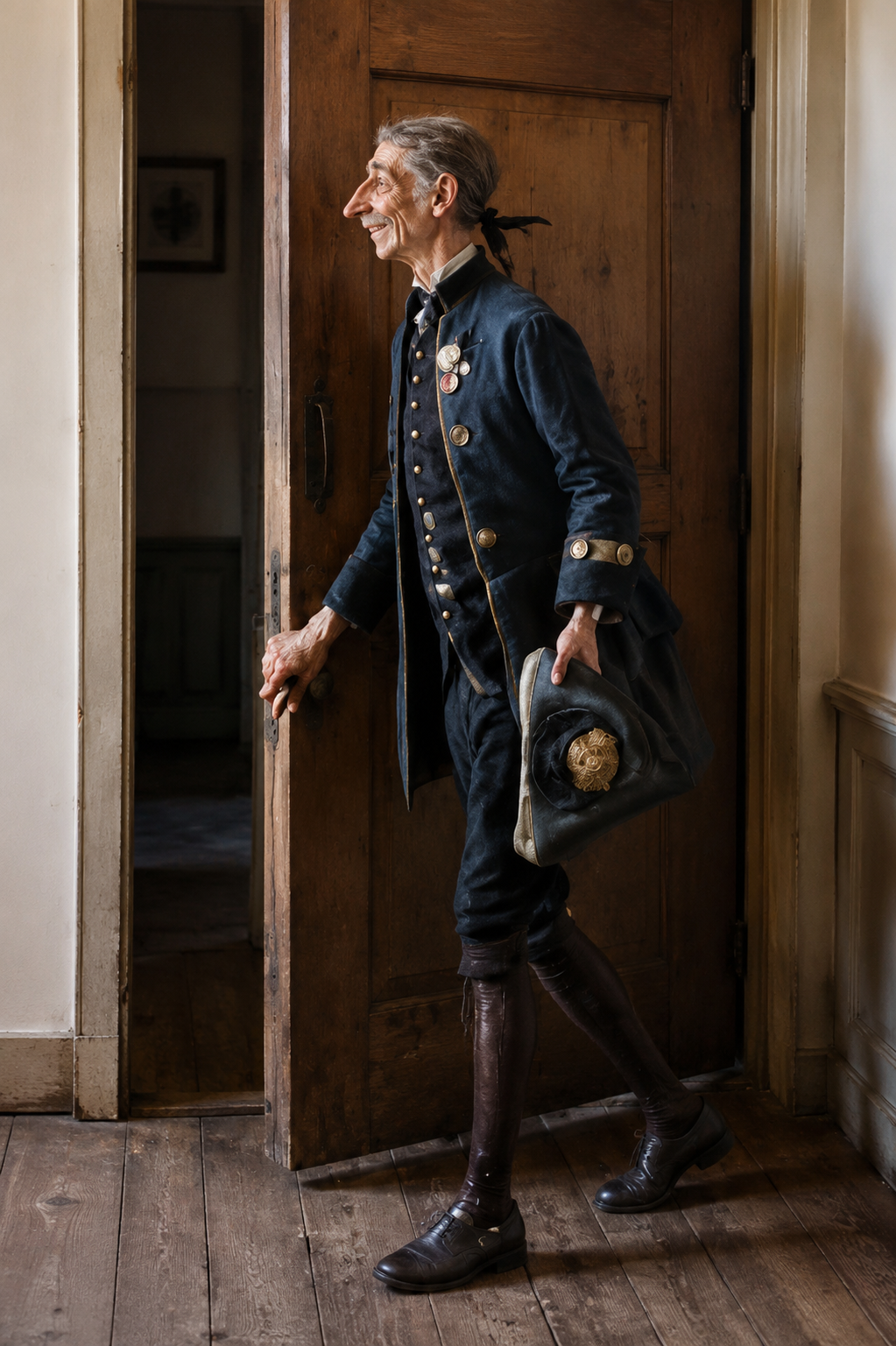
Into this valley arrived Ichabod Crane, a lanky schoolteacher from Connecticut whose imagination was almost as large as his appetite. Ichabod was deeply fascinated by ghost stories. Every whispered tale of witches, haunted woods, and wandering spirits lodged itself firmly in his mind. He also dreamed of a better life and believed marrying Katrina Van Tassel, the wealthy farmer's daughter, would provide the comfort and prosperity he desired.
Standing in his way was Abraham "Brom Bones" Van Brunt. Where Ichabod was nervous, Brom was fearless. Where Ichabod believed in every ghost story, Brom delighted in creating them. Rather than confront his rival openly, Brom chose something far more entertaining: he let superstition do the work for him.
The Ride Home
Everything changed after a harvest celebration at the Van Tassel farm.
The evening was filled with food, music, laughter, and, perhaps most importantly, ghost stories. Among them was the terrifying tale of a Hessian soldier who had been decapitated during the American Revolutionary War. According to local legend, the ghost rode nightly through Sleepy Hollow searching for his missing head.
As the celebration ended, Ichabod lingered behind to speak privately with Katrina. Whatever passed between them was never revealed, but he left disappointed. Now alone. Now riding home. Now carrying every terrifying story, he had heard that evening.
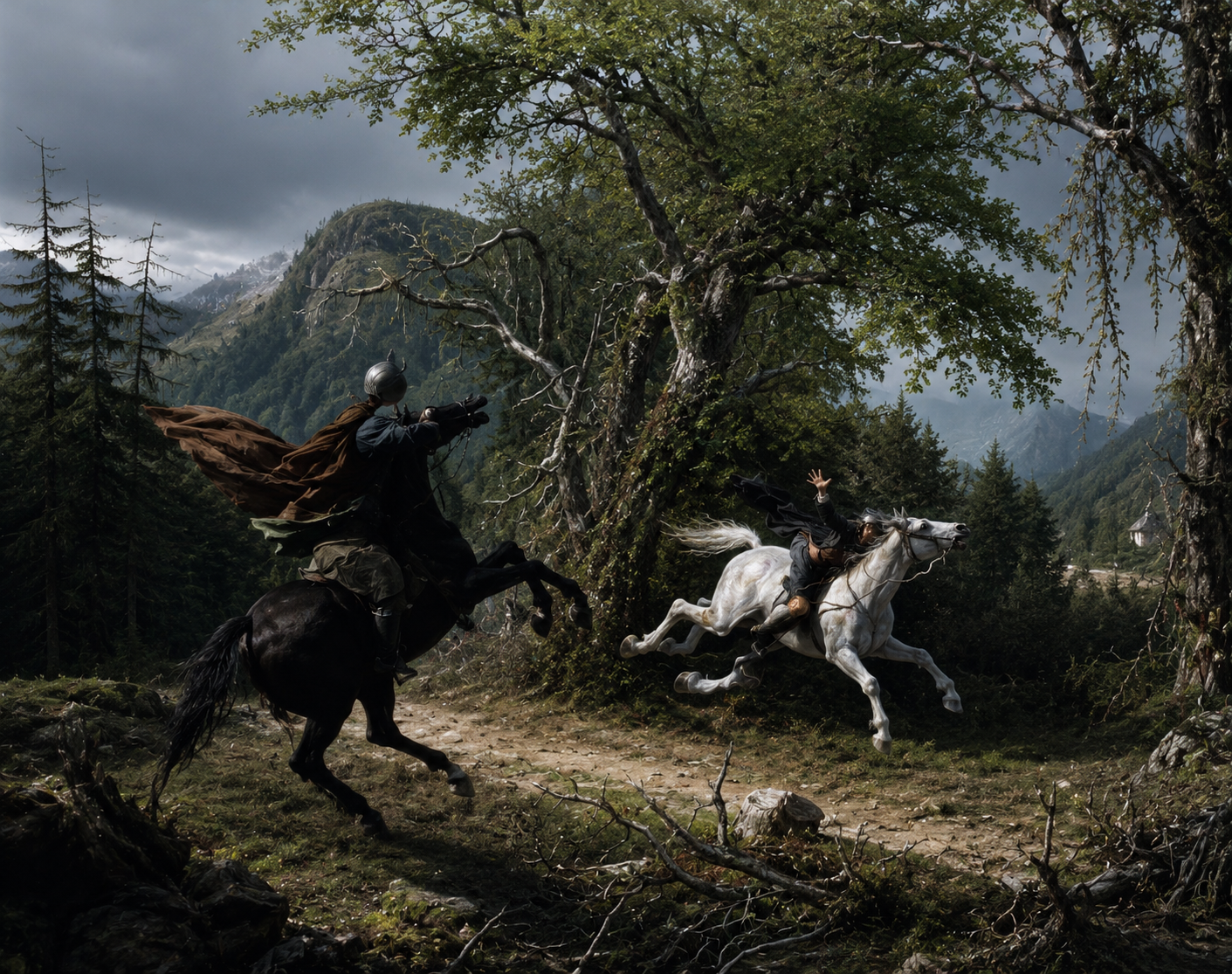
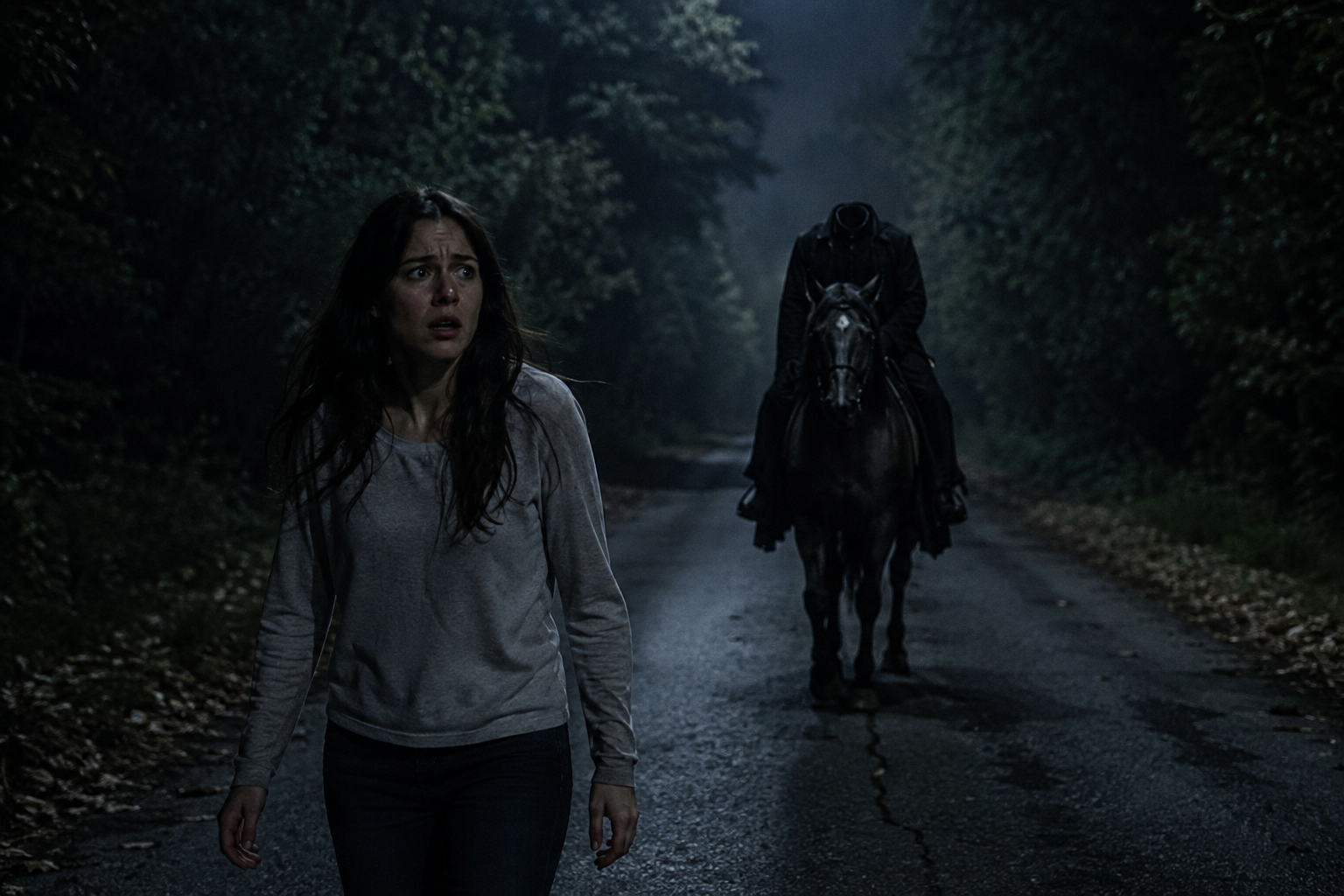
Dark forests have a way of amplifying fear. Every shadow becomes a figure. Every creaking branch sounds like footsteps. Every gust of wind feels like someone whispering your name. Then he saw the rider. The silent horseman appeared beside the road without warning. No face. No head.
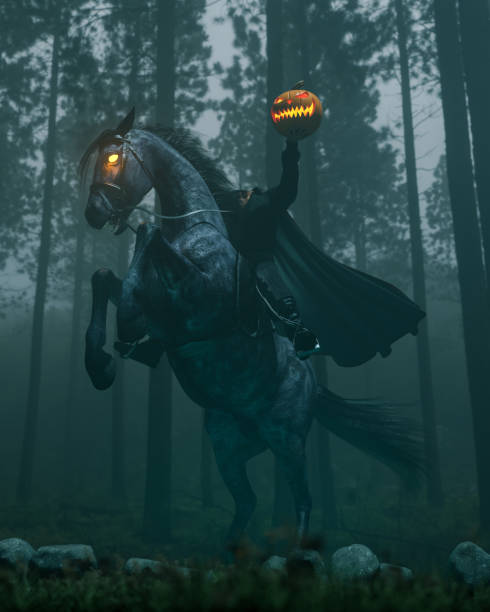
Only a dark figure mounted upon an equally dark horse. Ichabod fled in terror, remembering the local belief that the spirit could not cross the nearby bridge. If he could only reach it, he would be safe. He never did. Just before reaching the bridge, the rider hurled what appeared to be his own severed head, striking Ichabod and sending him crashing into the darkness. The following morning, his borrowed horse returned alone. Beside the bridge lay only his hat. And a shattered pumpkin.
Ghost... or Brilliant Prank?
Irving never tells us what really happened. Soon after Ichabod's disappearance, Katrina married Brom Bones. Even more suspicious, Brom was said to smile knowingly whenever anyone mentioned the Headless Horseman. The smashed pumpkin suggested the flying head may have been nothing more than a cleverly thrown squash.
Yet the mystery refuses to disappear. Was Brom simply playing the greatest practical joke in American literature? Or did he unknowingly encounter something that already haunted Sleepy Hollow? Irving wisely leaves the answer to the reader. And perhaps that uncertainty is precisely what makes the story immortal.
The Horseman Rode Long Before America
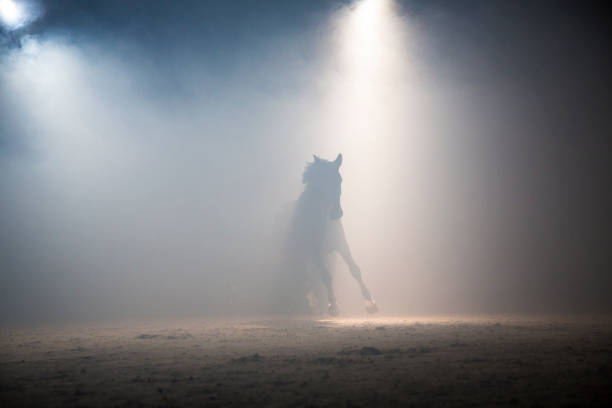
Although Washington Irving gave America its most famous headless rider, the legend itself is far older. Across Ireland rode the terrifying Dullahan, also called the Gan Ceann, whose name literally means "the Headless One." Unlike Irving's mysterious horseman, the Dullahan carried his own head beneath one arm while riding a black horse across the countryside. His skin was said to resemble moldy cheese, his grin stretched impossibly wide, and his eyes darted across the landscape like living flames.
Wherever the Dullahan stopped riding, someone was destined to die. No locks could keep him out. No gates could stop him. When he called a person's name, death followed immediately. Elsewhere in Europe, stories of headless riders appeared throughout the Middle Ages.
The Brothers Grimm preserved similar tales, while German folklore told of spectral hunters racing endlessly through the night. Historians have suggested Irving may have drawn inspiration from Sir Walter Scott's 1796 translation of The Wild Huntsman, itself rooted in older Norse traditions surrounding Odin's terrifying Wild Hunt. Others believe his ghost was inspired by the real Hessian soldier who reportedly lost his head to a cannonball during the Battle of White Plains in 1776. Like so many legends, the Headless Horseman appears to be a tapestry woven from history, folklore, and imagination.
We Still Listen for Hoofbeats
The Headless Horseman survives because he represents one of humanity's oldest fears: the fear of encountering something impossible while utterly alone. There is something unsettling about a deserted country road after sunset. Civilization falls away. Familiar sounds disappear. The darkness becomes deeper than it should be, and every distant noise seems to demand an explanation.
Our minds begin filling in the gaps. Perhaps that is exactly what Irving understood. Whether Brom Bones frightened away a rival with nothing more than a pumpkin, or whether a restless Hessian spirit still rides through the mist searching for what was lost centuries ago, hardly matters anymore.
The story has become larger than its ending. Like the Dullahan of Ireland, the Wild Huntsman of Germany, and countless spectral riders before him, the Headless Horseman reminds us that some roads should never be traveled after dark. Especially in autumn. Especially when you hear hoofbeats behind you. And especially if the rider has no head.


Comments (0)
Login or Register to leave a comment.