The Veil of Reality: Are We Living Inside a Simulation?

In 2003, philosopher Nick Bostrom formalized what is now known as the Simulation Hypothesis. His argument was simple: if a civilization becomes technologically advanced enough, it will likely develop the capacity to simulate entire universes, complete with conscious beings. If even one such civilization exists, and runs many simulations, then statistically it becomes more likely that we are inside a simulation than in “base reality.”
This idea has gained traction among prominent thinkers. Elon Musk famously stated that the odds we are living in base reality are “one in billions.” Physicists, too, have begun to explore whether reality behaves more like a rendered system than a continuous physical one.

Digital Physics and the Structure of Reality
One of the more convincing modern arguments comes from digital physics, the idea that the universe operates like a computer system. At the smallest measurable scale, the Planck length and Planck time space and time appear “pixelated,” not continuous. This is similar to how digital simulations work: everything is composed of separate units instead of smooth, infinite gradients.
Additionally, some researchers have pointed to the limits of information in the universe. The Bekenstein bound suggests there is a maximum amount of information that can exist within a finite region of space. This is eerily similar to memory limits in computer systems.
Then there is the holographic principle, a concept arising from black hole physics. It proposes that all the information contained within a volume of space can be represented on its boundary. This suggests that our three-dimensional reality may be a projection of information encoded on a two-dimensional surface. Simply put reality may be less like a solid object and more like a created image.
Quantum Mechanics: A Reality That Does Not Behave
Quantum physics has only deepened the mystery. At the quantum level, particles do not have definite states until they are observed. (“Quantum indeterminacy Definition - Physical Chemistry I...”) The famous double-slit experiment shows that particles behave like waves until measured at which point they “collapse” into a fixed position.
This has led some to suggest that reality functions similarly to a simulation that only renders detail when observed. If a person is not looking, then nothing happens. In video games, distant objects are not fully visible until the player looks at them. While this analogy is imperfect, the parallels are hard to ignore.
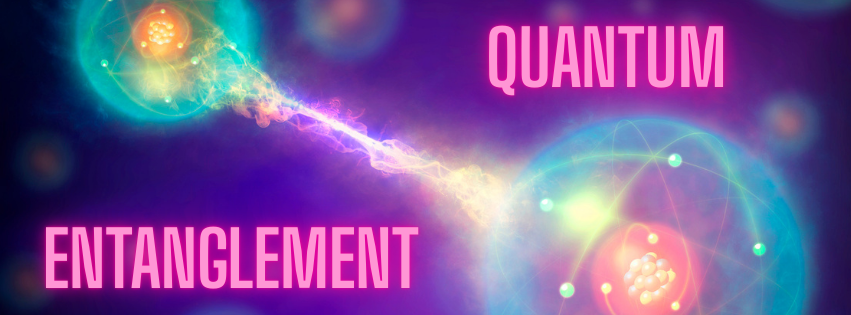
Entanglement adds another layer. Two particles can be instantly connected across vast distances, defying classical notions of space and time. If reality were a simulation, such “non-local” connections would be trivial because everything would exist within the same underlying system.

Ancient Echoes of a Simulated World
What is most fascinating is that the idea of reality as illusion is not new. Ancient cultures across the world described existence in ways that closely resemble modern simulation theory.
In Hindu philosophy, the concept of Maya describes the world as a kind of illusion or veil that hides the true nature of reality. The physical world is not false, but it is not ultimate, it is a projection, a temporary manifestation of a deeper truth.
Similarly, in Plato’s Allegory of the Cave, prisoners perceive shadows on a wall and believe them to be reality. Only when one escapes does he realize that what he experienced was a representation of something more real. This aligns with the idea that we are perceiving a constructed version of reality rather than its source.
Gnostic traditions went even further, suggesting that the material world is a kind of flawed construct, created by a lesser intelligence, trapping human consciousness within it. While framed in mythological language, the underlying idea of a fabricated or artificial reality is strikingly modern.
Consciousness: The Key Variable
One of the most significant challenges in understanding reality is consciousness itself. Despite advances in neuroscience, we still do not fully understand how subjective experience arises from physical processes.
In a simulation framework, consciousness could be seen as something external to the system. It is either the “player” interacting with an avatar, or a process running within the simulation that does not fully depend on its physical foundation.
Some interpretations suggest that consciousness is fundamental, and reality arises from it. Not the other way around. This flips the traditional materialist view and aligns with both quantum interpretations and ancient philosophical traditions.
Are There Signs of the “Code”?
People often ask whether there is direct evidence of simulation glitches, anomalies, or “code-like” structures in reality. While no definitive proof exists, there are curious observations.
Some physicists have explored whether the laws of physics themselves resemble error-correcting codes, the kind used in digital communication systems to preserve information integrity. Others have speculated about the speed of light as a kind of “maximum bandwidth” limit, or the quantization of energy as evidence of discrete processing units.

The Philosophical Implications
If we were living in a simulation, what would it mean?
For some, it diminishes reality suggesting that nothing is truly “real.” But for others, it does the opposite. A simulated world would still be an authentic experience, governed by consistent rules, meaningful relationships, and genuine consciousness.
In fact, it could imply intention. Simulations are typically created for a reason: to study, to preserve, to experiment, or even to entertain. This raises profound questions about purpose, agency, and the nature of existence itself.
Between Science and Myth
The idea that we are living in a simulation sits at an intersection of science, philosophy, and ancient belief. Modern physics hints at a reality that is informational, discrete, and observer dependent. Ancient traditions describe a world that is illusory, layered, and not entirely what it seems.
Are these just metaphors converging by coincidence? Or are they different languages describing the same underlying truth?
Currently, we do not have concrete proof that we are living in a simulation. But the question itself is powerful. It challenges our assumptions, expands our perspective, and forces us to reconsider what we mean by “real.”
And that is the crucial point: whether or not we are inside a simulation, we are undeniably inside something far stranger, more complex, and more mysterious than we once believed.



Comments (0)
Login or Register to leave a comment.