The Black-Eyed Children

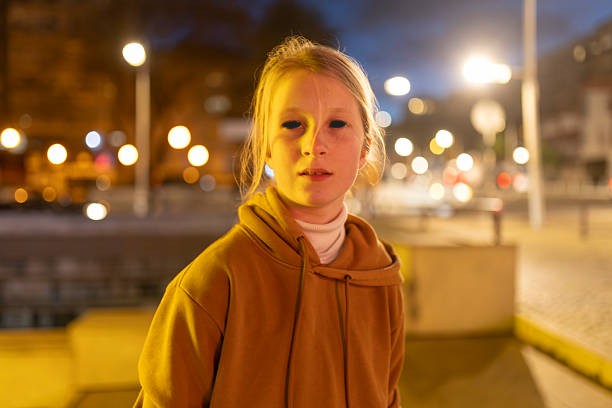
The first widely documented report of the Black-Eyed Children, often abbreviated as BEKs appeared in 1996, when journalist Brian Bethel shared a chilling encounter on a ghost-themed mailing list. The event occurred in Abilene, Texas, and the story spread rapidly online, solidifying the Black-Eyed Children as one of the most enduring modern urban legends.
Bethel was sitting in his car outside a strip mall late one night, writing a check to pay his cable bill after finishing a shift at the local newspaper. Without warning, he felt an intense sense of dread, the kind that raises the hair on the back of the neck. When he looked up, he noticed two teenagers standing uncomfortably close to his car.
They asked him for a ride to their mother’s house so they could get money for movie tickets. But something felt wrong. The movie they claimed to want to see had already started forty-five minutes earlier, and their voices sounded far older than their youthful appearances suggested.
Then, in the dim parking lot light, Bethel saw their eyes. They were completely black. No whites. No pupils. Just empty darkness. He immediately threw the car into reverse and sped away. When he glanced back moments later, the children were gone.
Who or What Are the Black-Eyed Children?
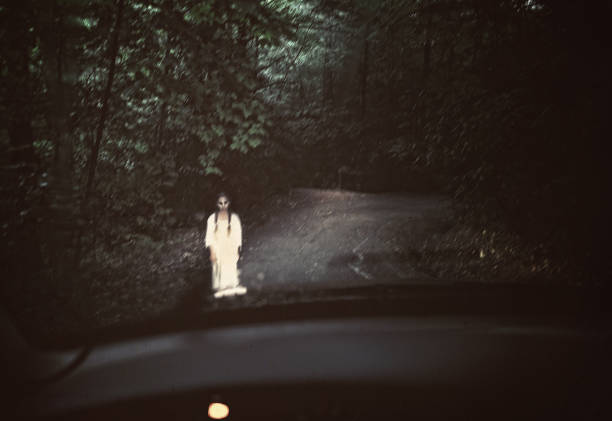
Black-Eyed Children are figures of modern American folklore, described as appearing human at first glance: pale skin, youthful faces, often dressed in outdated or oddly anachronistic clothing. They are most commonly encountered begging for help asking for a ride, requesting to use a phone, or standing silently on a doorstep late at night.
Their defining feature is, of course, their eyes: completely black, without iris or sclera. Witnesses often report a sudden surge of fear or instinctive revulsion upon noticing them.
The children are frequently described as speaking in flat, monotone voices, repeating the same phrases, and displaying emotional affect far older or far colder than expected for their apparent age. They are persistent, polite at first, and increasingly insistent.
And they always want to be let in. Author and journalist Jason Offutt, who has researched Black-Eyed Children for over a decade, describes interviewing witnesses across the world who claim similar encounters. “Their eyes are like a rat’s eyes,” he says. “There’s no pupil, no white, no iris just totally black.”
In several accounts, the children’s clothing bears logos or styles that no longer exist. In one case, they wore sports apparel representing a team that had folded more than a decade earlier.

Changelings and Other Masked Vulnerabilities
The Black-Eyed Children are not the first folklore figures to weaponize helplessness. In medieval Europe, theologians such as William of Auvergne promoted the belief that demons could replace human infants with inhuman substitutes a concept that fed directly into later changelings of Irish and Scottish folklore. These fairy children, swapped for human babies, were described as sickly, ravenous, strangely intelligent, and emotionally alien. They failed to thrive, cried endlessly, and seemed to drain vitality from the household.
In Romanian folklore, certain vampire-like beings known as strigoi were believed to originate from children particularly those unbaptized, stillborn, or otherwise excluded from proper ritual burial. A subtype known as moroi was thought to be the restless spirits of lost or dead children who returned to haunt family members. These entities were not always violent, but they were deeply disruptive, tied to illness, misfortune, and exhaustion.
Across cultures, the pattern repeats: when systems of care, ritual, or protection fail children, folklore responds by transforming them into something uncanny.
“May I Come In?”
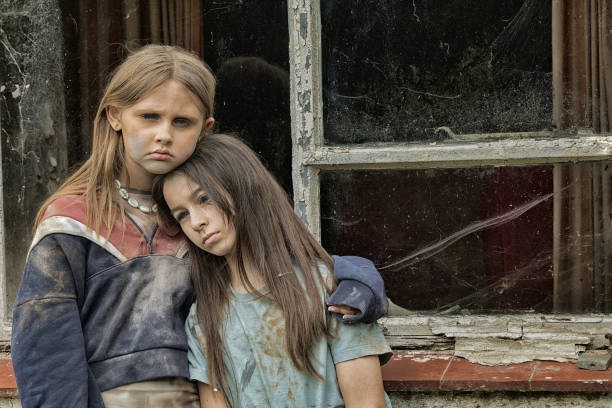
One detail appears almost universally in Black-Eyed Children accounts: they do not enter without permission. They wait on thresholds. They stand outside cars. They knock. They ask.
This detail links them directly to older supernatural traditions vampires, demons, spirits bound by rules of invitation. But unlike those ancient figures, the Black-Eyed Children feel distinctly modern. They don’t speak in riddles or archaic language. Their requests are painfully simple.
Can I come in?
Can I use your phone?
Can you help me?
Those who agree often report immediate consequences: sudden illness, power outages, malfunctioning electronics, animals behaving erratically, or the children vanishing the moment permission is granted. Many describe a lingering sense of being watched as though something followed them inside and never quite left.
“There are stories of people who have let them in and then disastrous things happen,” says scholar Brigid Burke. In some accounts, serious accidents, sudden cancers, or long-term misfortune follow the encounter.
What They Represent
Supernatural children in folklore almost never exist without cause.
They signal broken protection systems failures of family, community, ritual, or society itself. They appear at thresholds: between childhood and adulthood, life and death, human and inhuman. They embody cultural anxieties around loss, vulnerability, abandonment, and responsibility, especially fears surrounding children we failed to protect.
The Black-Eyed Children are rarely framed as purely evil. Instead, like their folkloric predecessors, they feel like consequences. Folklore does not turn children into monsters for shock value. It does so when something has gone terribly wrong ritually, socially, or cosmically. And when they knock, the most terrifying question is not what they are
but whether we will invite them in.


Comments (0)
Login or Register to leave a comment.