Southern Undead-The Casket Girls

In the early days of Louisiana, when the Mississippi still ruled more fiercely than any governor and the air hung thick with fever and fate, a ship arrived carrying young women and small wooden trunks. They were called Les Filles à la Cassette the Girls with the Caskets. And though history remembers them as brides for a struggling colony, folklore remembers them quite differently.
This is the story of the Casket Girls where truth and terror intertwine beneath the wrought-iron balconies of New Orleans.
Brides for a Dying Colony
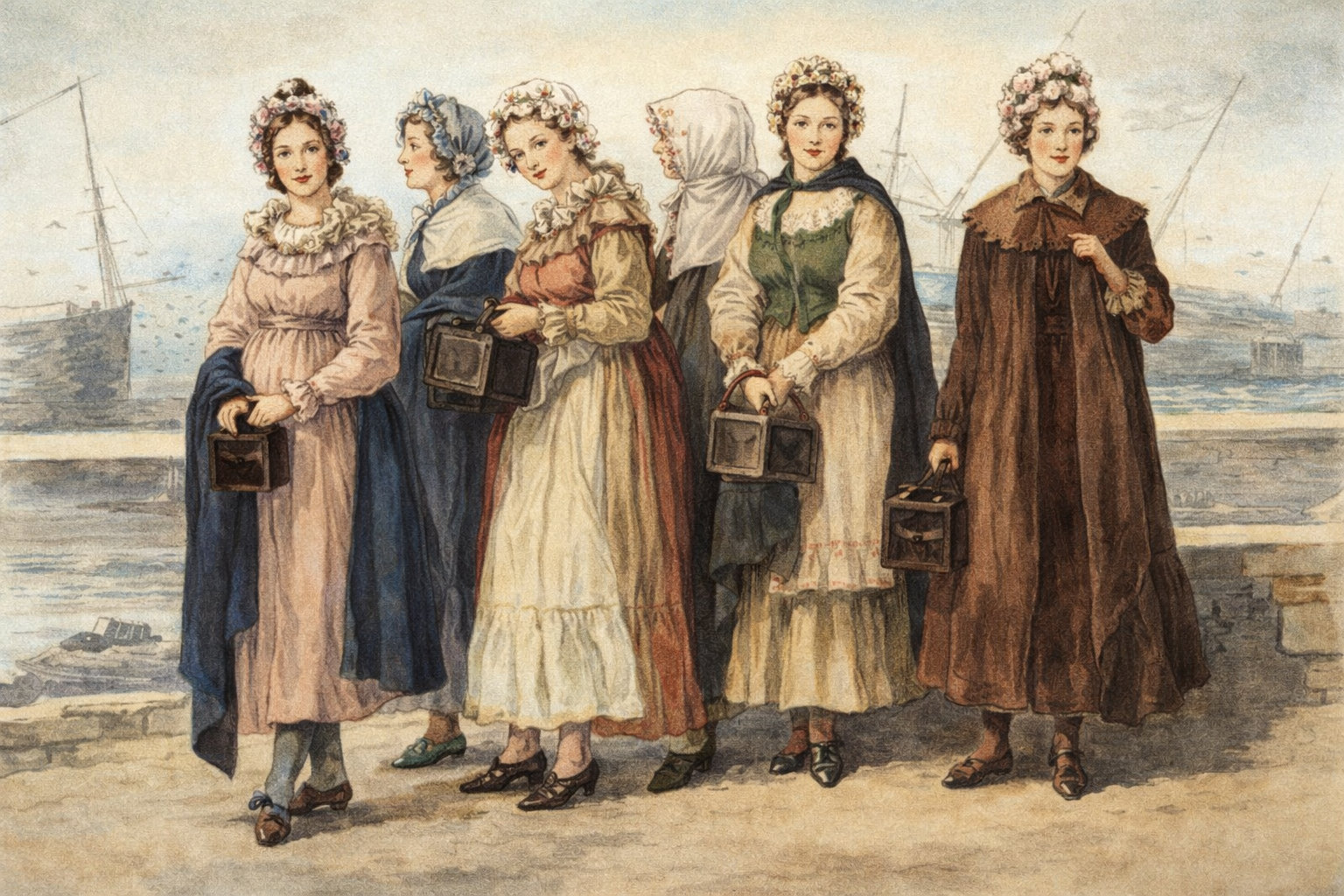
Between 1704 and 1721, French Louisiana was a fragile experiment. The colony suffered from hunger, disease, and a glaring imbalance of men to women. Soldiers, fur traders, and rough settlers filled the settlement, but without wives and families, the colony could not survive. So, the French Crown devised a solution.
Young women were recruited from Paris, Normandy, and western France. Some came from convent care. Some were orphans. Most were poor but respectable, devout Catholics carefully screened for marriage. They were not criminals, nor prostitutes despite what later whispers would suggest.
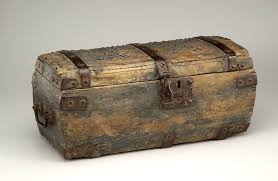
Each girl carried a small wooden chest, a cassette, containing modest dowries, clothing, religious items, and the fragile hope of a new life. In French, cassette simply meant “little box.” In English, it became something far more ominous. Casket.
The Weight of a Word
Language can rot like wood left in swamp water. Over time, “cassette” shifted into “casket,” and the imagination did the rest. A casket is not a trunk. It is a coffin.
And in a city like New Orleans, where above-ground tombs rise like pale cities and death is never far from the surface, the word alone was enough to plant a seed.
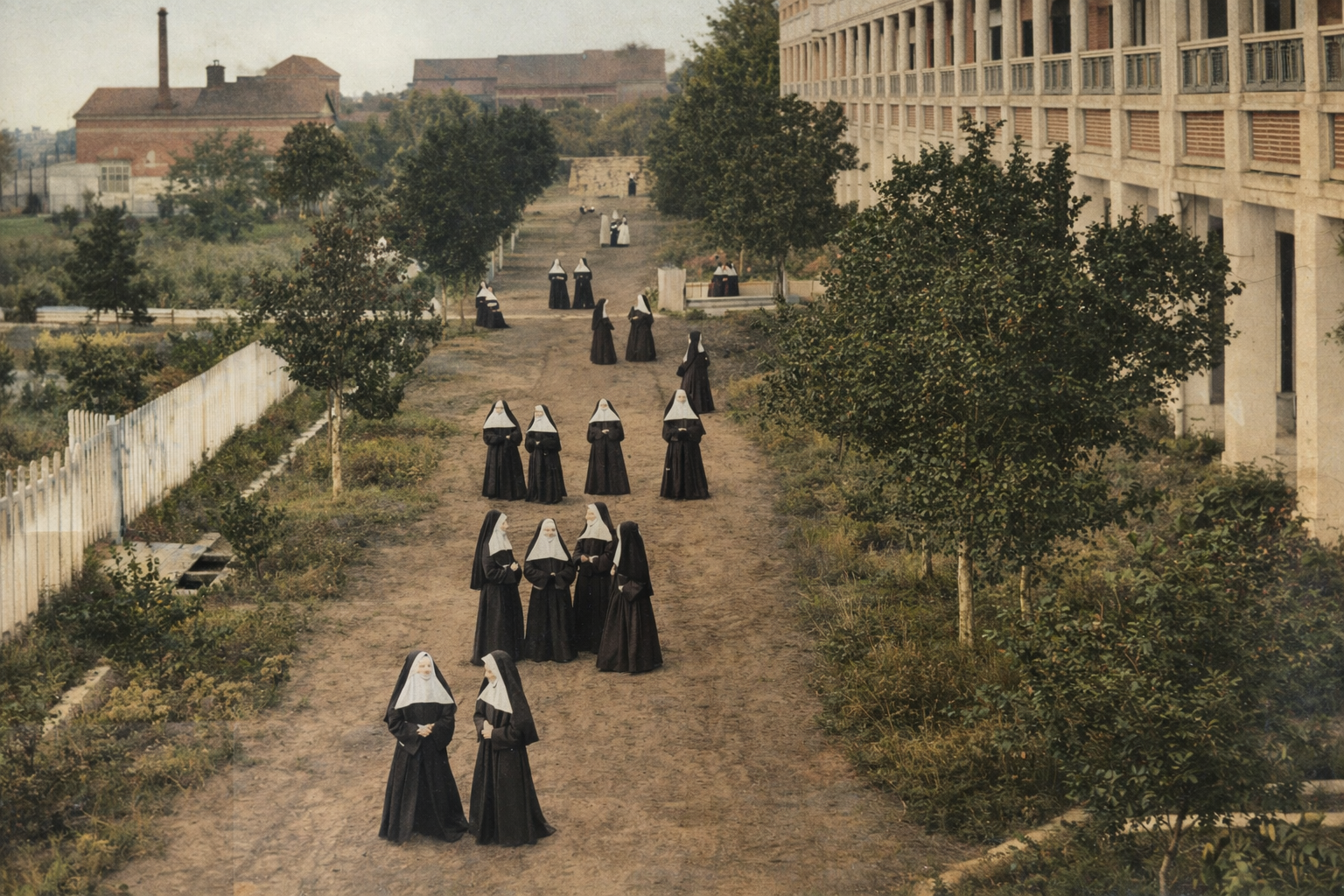
The girls arrived first in Mobile, then the capital of French Louisiana, before some made their way to Biloxi and eventually New Orleans after its founding in 1718. When the Ursuline nuns arrived in 1727, they helped house and educate young women awaiting marriage.
The Ursuline Convent, completed in 1745, still stands in the French Quarter today. It is the oldest building in the Mississippi Valley. And it is where the legend takes root.
The Attic That Never Opens
Walk past the Ursuline Convent at twilight and look up. You’ll notice the attic windows. Shuttered. Still. Silent.
For over a century, a story has circulated through gaslight tours and whispered barroom confessions: those shutters are sealed. Nailed shut with iron blessed by the Pope himself. And behind them the Casket Girls.
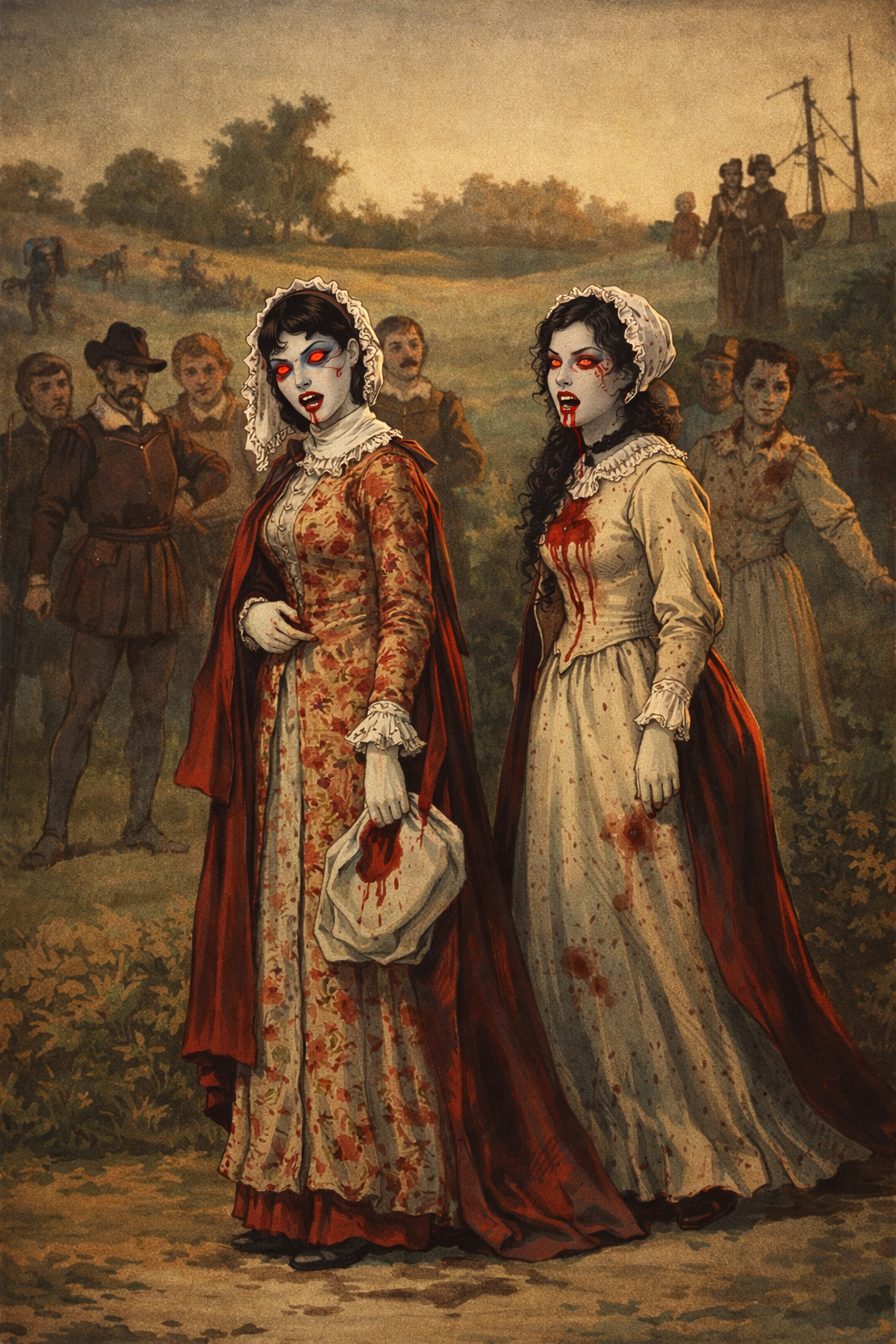
They were not brides. They were not colonists. They were vampires.
The legend claims that when the young women arrived from France, something was wrong. They did not eat. They avoided daylight. Their trunks were too narrow. Too coffin-like. The nuns, horrified, locked them in the attic. The shutters were nailed shut with sacred nails brought from Europe. No one has opened them since. Anyone who tries, the story warns, will die.
It is a story thick with Southern Gothic dread, convent walls, sealed rooms, foreign brides, religious dread. And none of it appears in colonial records. Then again, why would it?
History Versus the Hunger of Legend
Documented history tells a far less supernatural tale.
The Casket Girls were part of a colonial marriage program designed to stabilize population growth. They carried small dowry trunks, not coffins. They were housed and educated by the Ursuline nuns, not imprisoned by them.
There is no mention of vampirism in French colonial archives. No sealed attic rituals. No papal nails. In fact, the shutters at the Ursuline Convent have been opened and repaired multiple times over the centuries.
The vampire myth appears to be a late 19th or early 20th century invention, likely born from Gothic Romanticism and later fueled by New Orleans’ booming ghost-tour culture. The city’s aesthetic practically begged for such a tale: Catholic iconography, candlelit chapels, fever outbreaks, yellowed tombs, and air so humid it feels like breath on the neck.
By the time Anne Rice’s lush vampire fiction flooded the French Quarter with immortal longing, the Casket Girls legend found fertile soil. The story stuck. Because it fit. Or, because this was the only way to tell the true tale.
Why New Orleans Needed Vampires
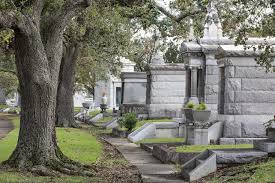
Some cities bury their dead underground. New Orleans builds monuments. The “Cities of the Dead” rise in marble rows above swampy earth. Black lace balconies curl over narrow streets. The Mississippi groans past like an ancient thing that remembers everything.
In such a place, brides arriving with wooden chests are not merely brides. They are omens. Add a convent, an institution already cloaked in mystery to outsiders. Add sealed shutters. Add the word “casket.” The transformation is inevitable. Folklore thrives where history leaves shadows.
The Real Legacy of the Casket Girls
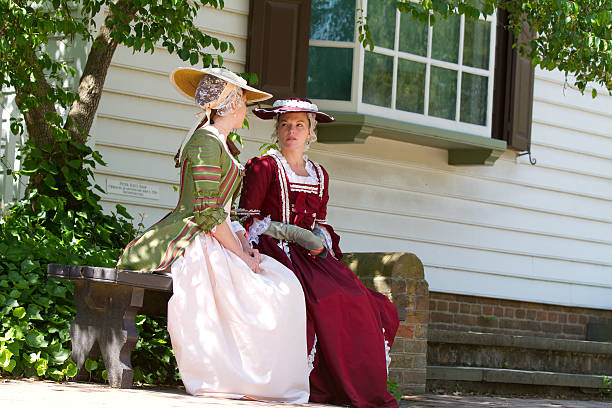
Strip away the vampire teeth, and what remains is still haunting. The Casket Girls represent one of the earliest acts of population engineering in North America. They were instruments of empire, sent across an ocean to marry strangers in a swamp colony riddled with disease and uncertainty.
They faced brutal climate, high mortality rates, isolation, and cultural upheaval. They came from Napoleon’s France to the murky and mysterious swamps of a fledgling nation. And yet from these marriages grew Creole lineages, families that shaped Louisiana’s identity for generations.
Their true story is not about bloodlust. It is about survival. It is about young women stepping off ships into heat thick as molasses, knowing their lives would never again resemble the narrow cobblestone streets of France. That quiet courage feels almost more Gothic than the myth.
Southern Gothic Memory
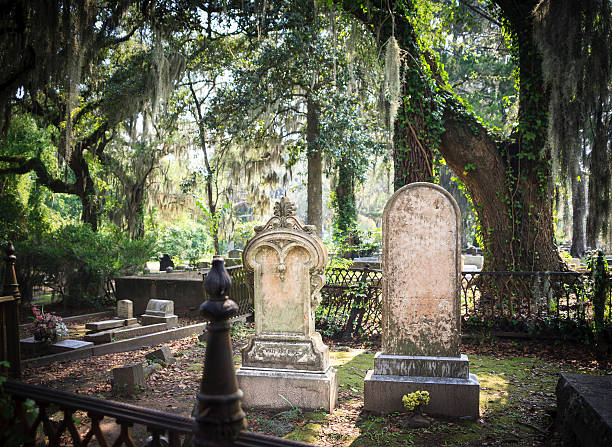
Southern Gothic thrives on decay, moral tension, and the supernatural pressing against the everyday. The Casket Girls sit perfectly at that crossroads. They were outsiders in a hostile land, women shaped by religious authority, symbols of colonial ambition, and yet later, creatures of folkloric darkness.
Their legend speaks to something deeper than tourism. It reflects how New Orleans processes trauma through story, through ritual, through spectacle. In a city that has survived fires, plagues, hurricanes, and occupation, perhaps turning history into myth is a form of protection. If the attic is haunted, then the past feels contained. If the shutters are sealed, then whatever came ashore centuries ago cannot reach us.
Standing Beneath the Shutters
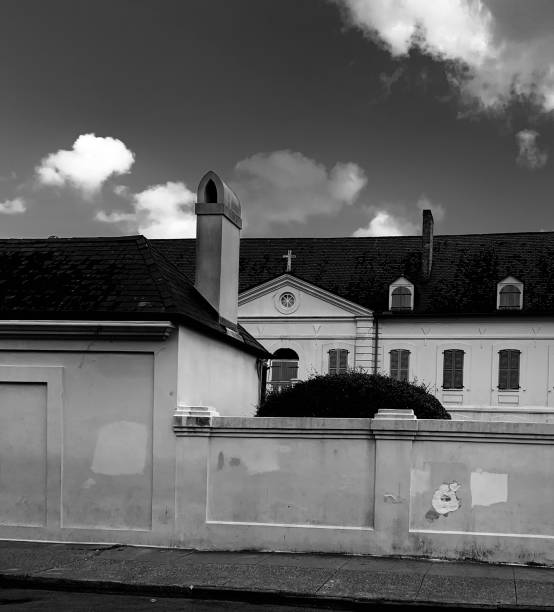
Today, the Ursuline Convent functions as a museum and archive. Visitors walk through its halls in daylight. Children pass on school trips. The shutters are simply part of an 18th-century architectural design.
But stand there at dusk. Wait until the Quarter quiets just enough to hear your own pulse. Look up at the darkened windows. You might know the historical truth. You might understand how language shifted cassette into casket. You might even recognize that no colonial document whispers of fangs in the attic.
And still. Maybe.
The story lingers. Because folklore does not require proof. It requires atmosphere. And New Orleans has that in abundance.
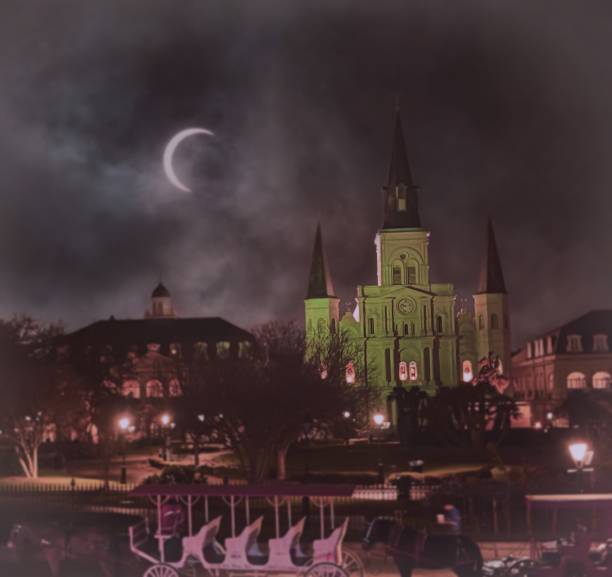
Fact, Fiction, and the Space Between
History tells us the Casket Girls were brides sent to secure a colony. Folklore insists they were something far older and far hungrier. Perhaps the real magic lies in that tension.
The girls arrived carrying hope in wooden trunks. Over time, those trunks became coffins in the collective imagination. Their journey became a ghost story. Their convent became a prison in whispered retellings.
In truth, they helped build Louisiana. In legend, they haunt it. And in a city where the living dance in cemeteries and brass bands play the dead home, perhaps both versions can coexist? There is the space between the documented past and the deliciously dark myth.
Because sometimes, the line between history and horror is only as thin as a shutter slat in the Louisiana heat. And sometimes, if you listen closely enough beneath the hum of cicadas and cathedral bells, you might sense something still breathing behind those sealed windows.

Comments (0)
Login or Register to leave a comment.