Haunted by Code: Ghosts in the Modern World

There was a time when ghosts belonged to places. They lingered in houses, crossroads, battlefields anchored to the physical world by memory, trauma, or unfinished business. To encounter one, you had to go somewhere: an abandoned room, a quiet forest, a threshold between the known and the unknown.
But today, the haunting has changed. The ghost no longer waits in the attic. It waits in your inbox. In your photo archive. In the quiet suggestion box of an algorithm that remembers more than it should. We are no longer just haunted by places. We are haunted by code.
The Persistence of the Dead
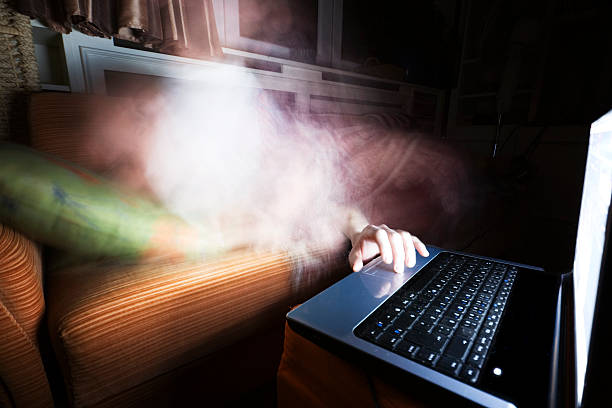
In traditional folklore, one of the defining traits of a ghost is persistence. Something remains when it should not. A voice. A shadow. A presence that refuses to leave. In the digital age, persistence has become effortless.
A person dies but their social media continues. Birthdays are still remembered. Old posts resurface. Algorithms suggest their face in “memories” or recommend them as someone you might want to reconnect with.
There is no ritual to lay them to rest. Their presence is no longer bound to memory alone, it is stored, indexed, and retrievable. Where a medieval ghost might appear at midnight, a modern one appears at 9:12 AM as a notification:
“You have memories with…”
The emotional effect is strikingly similar to traditional hauntings. Sudden, uninvited, and deeply disorienting.

Residual Hauntings in Data
Folklorists often distinguish between intelligent hauntings (a ghost that interacts) and residual hauntings (a replay of past events, like an echo). Modern systems are filled with residual hauntings. Old voicemails replayed years later. Emails preserved in archives. Chat histories frozen in time. Photos tagged, sorted, and resurfaced by unseen processes.
These are not conscious entities, but they behave like echoes. They repeat without understanding. They surface without intention. They remind us of moments we cannot return to yet cannot fully leave behind. In this sense, a cloud server is not so different from a haunted house. It is a structure filled with impressions of the past, endlessly replayable.
The Voice That Remains
Perhaps the most unsettling development in modern digital haunting is the preservation, and now, recreation of the human voice. With enough data, voices can be cloned. Personalities can be approximated. Conversations can be simulated. We are approaching a moment where speaking to the dead is no longer metaphorical. You may one day ask a system a question and receive an answer in the voice of someone who is no longer alive.
This echoes ancient practices in eerie ways; Spirit mediumship, Necromancy, and Calling upon the dead for guidance. But where these rituals once required sacred space and specialized knowledge, now they require only data and processing power. The question is no longer can we hear the dead? It is, should we?
The Haunted Archive
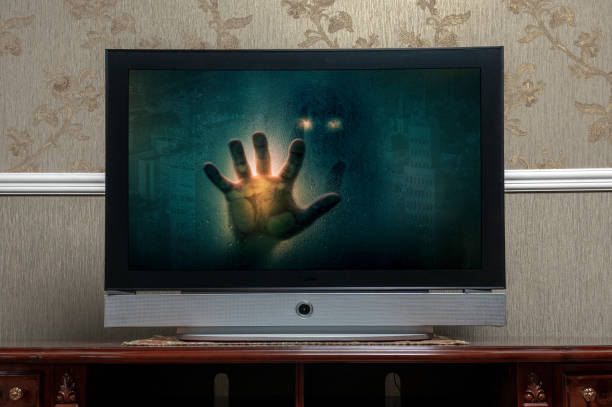
Historically, objects could become haunted mirrors, clothing, heirlooms imbued with emotional or spiritual residue. Today, our objects are digital. A single phone can contain years of messages, thousands of images, and the voice, likeness, and habits of a person. When someone dies, their digital archive becomes something strange. It is no longer just data.
It is presence without agency. People often describe the experience of scrolling through a deceased loved one’s messages as feeling like the person is “still there,” just out of reach. The conversation has not ended, it has simply stopped responding. This is perhaps the most accurate modern equivalent of a ghost. Not gone, not present but suspended.
The Algorithm as Medium
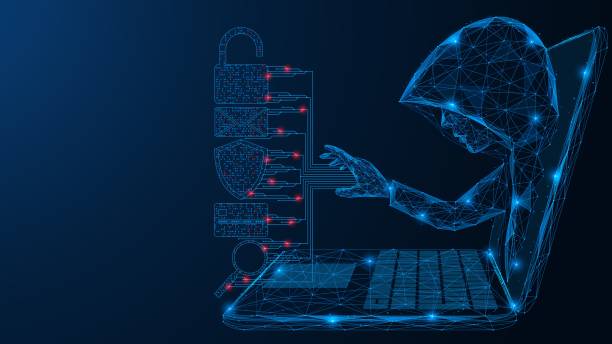
In older traditions, mediums acted as intermediaries between the living and the dead. Today, algorithms fulfill a similar role, though without intention or awareness. They decide what resurfaces. What is remembered. What is shown to you, and when.
An algorithm might resurface a photo of someone years after their death, recommend their profile to a stranger, suggest their voice in a dataset, or continue to “circulate” their presence through networks. It does not know what it is doing. But neither, in many traditions, did the forces that stirred the dead. This creates an unsettling dynamic. We are not being haunted by machines. We are being haunted through them.

The Unfinished Business of the Digital Dead
Ghosts, in folklore, are often tied to unfinished business. A wrong not righted. A message not delivered. A story not completed. In the digital world, unfinished business takes on new forms. A draft message never sent, conversations cut off mid-thread, projects left incomplete in shared folders, and accounts that remain active but unattended.
The digital self does not resolve cleanly. It lingers in fragments distributed across platforms, devices, and systems. And unlike physical remains, these fragments do not decay. They accumulate.
What makes modern digital haunting so powerful is not that it replaces older forms it extends them. The fear is no longer just that something might be in the dark. The fear is that something is stored somewhere, watching silently, and capable of reappearing at any moment. This is not through intention but through design. We built systems to preserve memory. We did not anticipate how close preservation would resemble haunting.
Closing the Door That Cannot Be Closed
Traditional folklore often offers a solution. A ritual. A prayer. A boundary that can be drawn. But digital haunting resists closure. There is no universal ritual for deleting a presence. Even when accounts are closed, copies may remain. Backups persist. Data is duplicated, mirrored, and archived. The ghost does not rely on a single place. It exists across a network.
We like to believe that we have moved beyond superstition that ghosts belong to the past, to candlelight and old stone walls. But the truth is more complicated. We have not abandoned the ghost. We have recreated it.
Only now, it is quieter. More persistent. And infinitely more difficult to escape. The modern ghost does not rattle chains. It sends notifications. And somewhere, in the vast architecture of stored memory and automated recall, it waits not to frighten us, but simply to remain.
Comments (0)
Login or Register to leave a comment.